Establishing Baseline Trade Secret Measures under PRC Competition Law
Enforcing PRC trade secret rights requires timestamped notary deposits, Chinese-law NNN contracts with court jurisdiction, and role-based operational physical containment.


Threshold
Under Article 9 of the PRC Anti-Unfair Competition Law, trade secret protection depends on three cumulative requirements: the information must be non-public, hold commercial value, and be subject to reasonable confidentiality measures by the rights holder. Foreign companies often assume that a standard non-disclosure agreement governed by foreign law satisfies this third requirement, but Chinese courts regularly reject that argument at the preliminary evidence stage. The Supreme People’s Court Judicial Interpretation 2020 Number 12 applies a contextual, objective test instead, looking at whether security measures correspond to the asset’s commercial value and whether access controls would signal to a typical industry participant that the material is proprietary.
Information is not legally non-public if people in the relevant field can easily obtain it through trade publications, academic papers, or simple product teardowns. If a company sells hardware in China without anti-tamper mechanisms or structural obfuscation, courts generally treat the internal design as public upon sale. Establishing commercial value requires showing actual economic utility ~ for instance, through R&D expense records, documented production savings, or market share gained against competitors.
Theoretical formulas or abandoned manufacturing attempts without clear operational utility rarely satisfy this requirement in civil court.
PRC courts reject trade secret claims where the underlying operational data was accessible to general factory personnel without role-based physical credentials.
Reasonable protection calls for physical, operational, and contractual controls built around the specific asset. Under Chinese civil procedure, these measures must already be in place before any alleged infringement occurs; retroactive policies adopted after discovering a leak carry no weight in court. A defensible baseline requires layered access controls on the asset itself, clear bilingual proprietary markings in Chinese and English, and signed restrictive covenants covering every employee or vendor handling the material.

Statutory Baseline Requirements
In practice, Chinese courts group confidentiality controls into physical security, digital permissions, contracts, and compliance enforcement. Judges in manufacturing centers like Shenzhen, Suzhou, and Ningbo focus on whether the rights holder maintained actual operational separation around its core technology. Relying on vague handbook clauses without explicit schedules of protected technical assets routinely leads to dismissal during preliminary evidence review.
| Protection Category | Statutory Standard under SPC Interpretation 2020 No. 12 | Evidentiary Requirement for PRC Courts | Common Operational Vulnerability |
|---|---|---|---|
| Physical Perimeter Security | Restricted access to manufacturing zones, locked storage, visitor logging | Timestamped access logs, biometric gate records, physical security audits | Unescorted vendor tours through unmasked assembly lines |
| Digital Rights Management | Role-based network access, file encryption, external device blocking | Server permission trees, automated access logs, encrypted file headers | Sharing unencrypted CAD models over consumer messaging applications |
| Contractual Restraints | Specific non-disclosure terms, defined technical boundaries, duty schedules | Executed bilingual agreements, explicit trade secret schedules, signed receipts | Vague definitions listing all business information as confidential |
| Operational Discipline | Periodic training, asset marking, exit audits, breach response protocols | Signed training attendance logs, physical asset stamps, off-boarding receipts | Failure to revoke digital credentials on employee termination day |
Proving that specialized technical data is non-public requires careful record-keeping before entering any business arrangement in China. Companies should establish baseline documentation before exposing proprietary technology to local joint ventures, OEMs, or assembly plants. This starts with compiling complete technical dossiers, logged and timestamped prior to disclosure.
Without verified pre-disclosure timestamps, defendants frequently defeat claims by alleging prior public knowledge or independent development.
The judicial interpretation offers specific criteria for assessing whether protective measures are adequate. Judges look for direct physical labels, such as trade secret warnings stamped on technical drawings in simplified Chinese. Marking documents solely with English terms like Confidential frequently falls short in regional courts when litigating against domestic sub-suppliers.

Sequential Confidentiality Execution Plan
Qualifying for protection under Article 9 requires a clear execution sequence put in place before sharing technical drawings, tooling parameters, or formulations with external partners. Omitting early classification steps routinely undermines later court filings.
- Technical Asset Identification Inventory all proprietary drawings, source code, bills of materials, and process tolerances before introducing them to Chinese manufacturing operations.
- Secrecy Classification Allocation Mark every file, folder, and tooling component with explicit ownership notices in simplified Chinese and English.
- Physical and Logical Separation Isolate proprietary assembly lines, air-gap master servers, and enforce role-based access controls.
- Bilingual Contract Execution Bind all corporate entities, engineers, sub-tier vendors, and contractors to explicit non-disclosure schedules under Chinese law.
- Notarized Baseline Recording Deposit master digital files with a licensed PRC notary public before transmitting any data across borders.
Each step creates documentary proof supporting the legal presumption that reasonable security measures were taken. Omitting any step gives competitors room to challenge whether the material qualifies as a trade secret at all. Confidentiality requires continuous enforcement; sending a single unencrypted file to an unvetted sub-tier supplier breaks the chain of protection.
Ultimately, enforcing an entire technical portfolio depends on whether these early baseline measures withstand cross-examination in court.
Whether regional courts will expand the definition of reasonable security measures to cover unencrypted cloud data hosted on foreign servers remains an open question.


Vault
Physical and digital controls are the primary defense for technical assets inside Chinese manufacturing plants. Relying on contracts without physical barriers regularly leads to leaks, particularly in contract facilities where floor workers, sub-tier vendors, and maintenance staff work right alongside proprietary tooling. Securing a perimeter requires isolating proprietary assembly cells from general factory areas.
Hardware companies in major manufacturing hubs like Dongguan or Kunshan typically set up dedicated partition walls, biometric access doors, and closed-circuit cameras monitored by internal security.
Digital systems need strict controls to block unauthorized exports. Networks hosting core engineering files should be isolated from general corporate Wi-Fi. Workstations in Chinese subsidiaries require disabled USB ports, local drive encryption, and central logging software to record downloads and print jobs. When technical drawings leave secure servers for CNC equipment or test rigs, transfers should run through encrypted channels with automated expiry timers.
Effective containment depends on technical friction; weakening that friction for employee convenience directly weakens any claim of reasonable protection in court.
Tooling security poses a distinct physical challenge in Chinese supply chains. Custom injection molds, precision stamping dies, and test fixtures contain core product geometry. Unchecked tooling enables contract manufacturers to run unauthorized production ~ commonly called shadow shifts or night shifts.
Companies prevent this by installing physical counter locks, tamper-evident seals, and GPS sensors inside mold frames. Mechanical counters track total production cycles, allowing auditors to reconcile cycle counts against paid purchase orders.

Technical Control Integration
Linking physical controls with software permissions generates the audit trails needed in court. ERP systems in domestic subsidiaries require strict segregation of duties; an engineer approving component specifications should not have access to export bill-of-materials databases to external drives. Network administrators must track outbound transfers for off-hours bandwidth spikes, which often indicate a mass data extraction attempt.
Watermarking digital assets provides both visual and steganographic tracking across technical files. Serialized watermarks embed employee IDs and vendor codes into vector layers of CAD models, schematics, and chemical ratio sheets. If a supplier or employee leaks a watermarked file to a competitor, forensic analysis can trace the breach to the exact access node.
This level of traceability satisfies Chinese evidentiary standards regarding the origin of stolen secrets.
Controls must also cover physical scrap and sample handling on the shop floor. Prototypes, off-spec parts, and machining waste contain proprietary structural details, and unmonitored scrap bins are a common source of industrial leakage. Manufacturing contracts should require locked scrap containers, on-site destruction, and receipts witnessed by third-party auditors.
Leaving scrap unmanaged compromises any argument that the underlying geometry was kept under reasonable security.
Air-gapping key testing equipment prevents remote network breaches. Diagnostic tools and calibration firmware used on the floor should reside on dedicated hardware without internet access. Software updates should be installed manually by security staff using encrypted, read-only media.
If machinery includes remote access software for maintenance, it should remain disabled by default, requiring physical authorization keys for temporary vendor service sessions.
Physical containment breaks down when visitor controls become a formality. Security gates should enforce badge registration, photo identification, and device checks for all outside consultants, vendors, and technicians. Maintenance personnel must be escorted by compliance staff whenever working around proprietary machinery.
Allowing unescorted third-party technicians inside a cleanroom or machining cell undermines claims of strict perimeter security in subsequent litigation.
A physical lock without a timestamped access log provides no legal standing in a Chinese court.
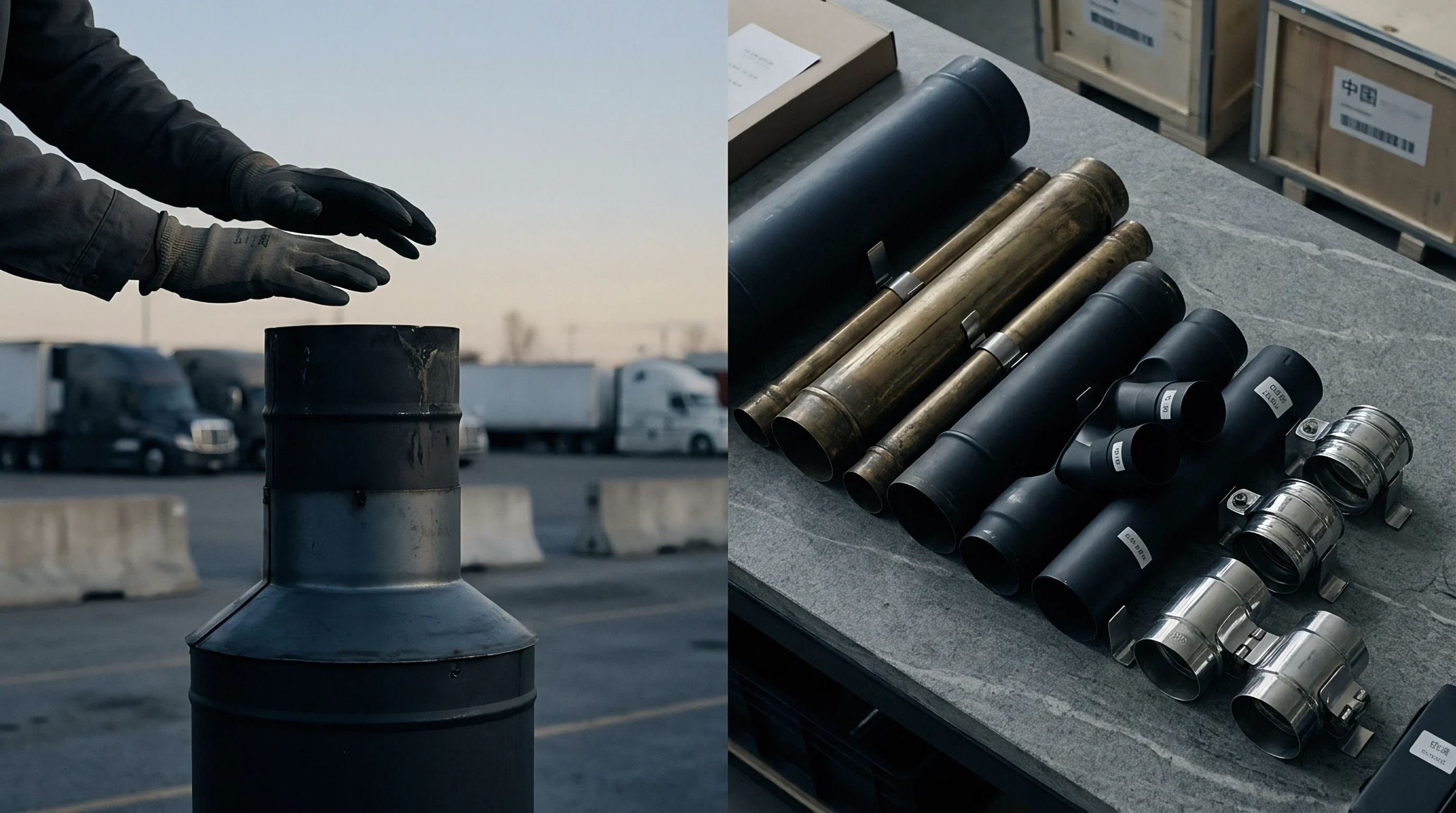

Paperwork
Contractual protection under PRC law requires agreements drafted around Chinese statutory definitions. Simply translating a standard Western non-disclosure agreement rarely works in domestic courts. Western templates typically specify foreign law, foreign arbitration, and broad definitions of confidential information.
Chinese judges routinely reject definitions that label all business communications as confidential, viewing them as unenforceable restrictions on basic commercial knowledge. Effective contracts rely on targeted schedules detailing specific drawings, manufacturing parameters, source code repositories, and pricing structures.
Employment agreements form the primary legal barrier against internal theft. Articles 23 and 24 of the PRC Labor Contract Law permit employers to include confidentiality terms and non-compete covenants for senior management, senior technical staff, and employees with trade secret access. However, employers must pay mandatory monthly compensation to former staff throughout the non-compete period, which cannot exceed two years.
Failing to define an explicit compensation schedule makes the non-compete restraint voidable at the employee’s option under judicial interpretations.
Vendor agreements require Non-Disclosure, Non-Use, and Non-Circumvention (NNN) structures governed by PRC law and enforceable in local courts. An effective NNN agreement sets clear liquidated damages for specific breaches. Foreign rights holders usually choose court jurisdiction where the supplier operates or holds assets.
Selecting a domestic court allows companies to seek pre-litigation asset freezing and evidence preservation orders ~ remedies unavailable through foreign arbitration.

Contractual Enforcement Architecture
Enforceable trade secret protection requires distinct contracts tailored to each commercial relationship. Combining employment clauses with vendor supply agreements dilutes enforcement clarity.
| Contract Instrument | Governing Statute / Provision | Mandatory Operative Mechanism | Judicial Enforcement Focus |
|---|---|---|---|
| Employee Restrictive Covenant | PRC Labor Contract Law Art. 23-24 | Monthly post-exit compensation payments equal to at least 30% of average monthly wage | Verification of actual monthly compensation wire transfers following employee departure |
| Vendor NNN Agreement | PRC Anti-Unfair Competition Law Art. 9 | Pre-agreed liquidated damages linked to specific technical breach scenarios | Proportionality of liquidated damages relative to anticipated business loss |
| Third-Party Joint Development Agreement | PRC Civil Code (Contract Book) Art. 843-887 | Explicit ownership allocation for foreground IP and derived modifications | Documented baseline records of background IP prior to project commencement |
| Sub-tier Supplier Pass-Through Covenant | PRC Anti-Unfair Competition Law Art. 9(3) | Mandatory third-party beneficiary rights and direct audit authority over sub-contractors | Chain of written authorization permitting access to master technical files |
Setting clear liquidated damages in vendor agreements simplifies court collection. Chinese courts enforce liquidated damages that reasonably estimate expected loss; if the specified penalty far exceeds verifiable damages, judges will reduce the award. Structuring liquidated damages as set amounts linked to specific breaches ~ such as unauthorized subcontracting, tampered tooling counters, or unapproved factory relocations ~ gives judges a concrete baseline for enforcement.

Contractual Failure Modes
Foreign companies frequently make the same drafting errors when structuring trade secret agreements in China. Identifying these failure modes helps avoid unenforceable terms before signing:
- Foreign Governing Law Selection Designating foreign jurisdiction, which prevents domestic courts from issuing emergency evidence preservation orders.
- Uncompensated Non-Compete Agreements Omitting monthly post-employment compensation for departing engineers, rendering non-compete terms legally unenforceable.
- Overbroad Confidentiality Definitions Labeling all emails and conversations as confidential, causing courts to reject the scope for vagueness.
- Missing Chinese Entity Nomenclature Using English trade names instead of the official corporate name printed on the supplier’s business license.
- Omission of Sub-Tier Controls Failing to restrict primary suppliers from sharing master CAD files with unvetted downstream vendors.
- Unsigned Technical Schedules Attaching blank or unexecuted annexes to signed agreements, breaking the link between contractual terms and specific assets.
Executing contracts with Chinese entities requires careful attention to corporate authority. Agreements must be signed by the legal representative named on the business license or an agent with a notarized power of attorney. In addition, the physical contract must bear the company chop stamped over the signature block.
Under PRC law, the company chop carries primary binding authority; a signature alone without an official seal invites challenges to the signatory’s authority.
Off-boarding technical staff requires formal exit interviews. The departing employee should review and sign an explicit schedule of ongoing confidentiality obligations, return all physical media, keys, devices, and notes, and confirm bank details for non-compete payments. The company then issues a signed compliance certificate.
Thorough exit records make it much harder for former employees to claim ignorance about specific proprietary assets in future disputes.
Using standardized foreign non-disclosure templates across East China suppliers routinely leads to dismissal when contracts select foreign arbitral forums over local intermediate courts.
Selecting exclusive jurisdiction of the PRC intermediate people’s court where the defendant holds primary assets provides direct access to asset freezing, evidence preservation, and civil execution under Article 103 of the PRC Civil Procedure Law.


Forensics
Evidence collection under PRC civil procedure is strict and formalistic. Chinese courts do not have common-law pre-trial discovery, leaving the rights holder entirely responsible for gathering and presenting authenticated proof of ownership, confidentiality, access, and technical similarity. Courts routinely exclude digital evidence gathered informally; files extracted from servers, mobile devices, or email accounts must be officially notarized by a licensed Chinese notary public within the country.
During notarization, a PRC notary must personally witness and document the evidence collection. If extracting CAD files or emails from a workstation, the notary inspects the site, verifies the device, oversees disk imaging, and seals the storage media. The notary then issues a formal Notarial Certificate (Gongzheng Shu).
Chinese courts accord high credibility to these certificates, treating notarized facts as established unless the opposing party presents clear evidence of tampering or procedural illegality.
Assessing technical similarity usually requires an independent expert appraisal. Courts routinely select appraisal centers from official judicial registries to evaluate complex claims. The center compares the proprietary trade secret against the defendant’s products or processes, examining structural geometry, chemical composition, source code, or operational steps to evaluate identity.
Rights holders must provide clean baseline technical dossiers to support this comparison.

Notarized Evidence Preservation Protocol
Preserving digital and physical evidence requires strict adherence to formal steps to ensure admissibility in Chinese courts:
- Retain a licensed PRC notary public to witness all digital extractions, site inspections, or sample purchases.
- Perform a notarized test purchase of suspect components from domestic e-commerce platforms or distributors, securing sealed samples and official tax invoices.
- Execute forensic disk imaging of suspect workstations using write-blocking hardware under direct notary supervision.
- Hash all extracted files using SHA-256 algorithms and record the timestamped hash values directly in the notarized certificate.
- Submit sealed media and notarized records to the intermediate court alongside a formal application for pre-litigation evidence preservation.
Chain of custody documentation determines whether technical evidence survives defense challenges. Anyone handling hardware, storage drives, or samples must log access on timestamped transfer forms. Internal forensic teams conducting preliminary checks before litigation should work in air-gapped environments, record software version numbers, and videotape hardware teardowns.
Any unrecorded gap in physical custody or digital handling gives defense counsel grounds to allege evidence tampering.
Pre-litigation evidence preservation orders allow rights holders to secure evidence directly from a defendant’s premises. Under Article 81 of the PRC Civil Procedure Law and Article 32 of the Anti-Unfair Competition Law, a company can petition the court for an unannounced evidence seizure. To obtain an order, the applicant must present clear preliminary proof of ownership, probable infringement, and the risk that evidence will be destroyed if advance notice is given.
The applicant must also post a bond or bank guarantee covering potential commercial losses the defendant might incur during the search.
Even where a target factory operates identical CNC programming sequences, software deleted during an unannounced weekend shift leaves no physical record behind for judicial appraisal.


Burden
Historically, proving trade secret theft in Chinese courts was difficult for foreign companies because core evidence remained locked inside the defendant’s facilities and servers. The 2019 amendment to the PRC Anti-Unfair Competition Law significantly altered this dynamic by introducing Article 32. Under this provision, once the rights holder establishes a prima facie case, the burden shifts to the defendant to prove lawful acquisition or independent development.
Under Article 32, Paragraph 1, the plaintiff must present preliminary evidence of three things: reasonable confidentiality measures, the defendant’s access or opportunity to obtain the secret, and substantial identity between the plaintiff’s secret and the information used by the defendant. Once established, Paragraph 2 shifts the burden to the defendant to show that the information was acquired legitimately, derived from public sources, or developed independently.
Punitive damages under Article 17 of the Anti-Unfair Competition Law reach up to five times the calculated actual loss when intentional misappropriation and grave consequences are established.

Evidentiary Shift Analysis
Triggering the burden shift requires clear evidence addressing each element of Article 32. Courts apply strict standards before compelling a defendant to produce internal technical records.
Proving access requires concrete records connecting the defendant to the protected material ~ such as attendance records, server download logs, visitor sign-ins, or project contracts showing direct exposure. Mere speculation that a former employee must have taken information during their employment is insufficient without access logs showing interaction with the specific proprietary file.
Evaluating technical identity focuses on core features rather than surface differences. Forensic reports often highlight shared quirks ~ such as identical layout errors, identical code comments, matching tolerances, or non-functional chemical impurities. Copied design artifacts or unique manufacturing errors offer strong proof of technical derivation under Chinese practice.

When Does the Evidentiary Shift Apply under Article 32?
The burden shifts only when the plaintiff establishes a complete prima facie record in preliminary hearings. Intermediate courts apply a three-part test to determine whether the burden shifts under Article 32:
- Documented Reasonable Protection Valid notary certificates, signed bilingual agreements, and physical access records for the specific asset.
- Demonstrated Opportunity Access Server download logs, badge records, or project contracts showing direct access to the secret.
- Forensic Technical Identity Admissible expert appraisal reports confirming identical structural features, software code, or manufacturing parameters.
Failing any element of this checklist keeps the full burden of proof on the plaintiff. If a company cannot establish reasonable baseline security, the court will dismiss the case without requiring the defendant to explain how it developed its competing process. Establishing reasonable protection is a strict prerequisite for using Article 32.
Defendants frequently claim independent development by presenting internal engineering notebooks, patent filings, or supply contracts. Rights holders challenge these defenses by asking the court to inspect record timestamps and by questioning whether the defendant actually possessed the R&D budget, engineering staff, and testing equipment to develop the technology independently within the claimed timeframe.
Reverse engineering is another common defense. Competitors can lawfully acquire technical data by disassembling or analyzing products bought on the open market. However, reverse engineering is not a valid defense if the product was obtained in breach of a contract ~ such as an NDA or license that prohibits reverse engineering.
Rights holders should include explicit anti-reverse-engineering clauses in every sales contract, evaluation agreement, and vendor relationship governed by Chinese law.
Executing an aggressive evidence preservation application in a tier-two domestic court can run eighty-five thousand dollars in notarization fees, translation costs, and forensic expert bonds, only to be rejected if digital access logs lack mandatory local timestamp certifications.

Clearance
Calculating monetary damages requires clear financial modeling based on PRC statutory frameworks. Article 17 of the Anti-Unfair Competition Law sets a hierarchy for civil recovery: damages are based first on actual losses suffered by the rights holder. If actual losses are difficult to quantify, recovery is calculated from the infringer’s operational profits derived from the secret.
Claimants can also recover reasonable enforcement expenses, including notarization fees, legal costs, and appraisal expenses.
Punitive damages apply in cases of intentional misappropriation involving severe circumstances. Under Article 17, courts may award punitive damages of one to five times the baseline loss or infringer profit. Intentional misappropriation includes deliberate breach of clear NDA terms, employee bribery, or corporate espionage with full knowledge of the asset’s trade secret status.
Severe circumstances cover widespread public exposure of core technology, destruction of the claimant’s market position, or multi-year unauthorized mass production.
| Calculation Model | Statutory Basis (AUCL Art. 17) | Primary Financial Evidence Required | Judicial Discretion Range |
|---|---|---|---|
| Actual Loss Model | Direct financial loss to rights holder | Audited profit margin declines, lost customer sales records, price reduction proof | Strictly tied to verified financial records and certified tax filings |
| Infringer Profit Model | Commercial gains realized by defendant | Defendant’s tax filings, factory production records, commercial invoice logs | Subject to court reduction for non-infringing production contributions |
| Reasonable Royalty Model | Multiple of fair market licensing fees | Historical third-party license agreements, arms-length royalty receipts | Typically assessed at one to three times verified benchmark royalty rate |
| Statutory Damages Model | Fallback statutory capped award | Proof of infringement where precise financial loss cannot be quantified | Discretionary awards up to a statutory cap of 5 million RMB |
Severe cases may warrant criminal prosecution under Article 219 of the PRC Criminal Law. Criminal liability applies when trade secret theft causes serious financial losses exceeding statutory thresholds. Public Security Bureaus (PSB) investigate criminal trade secret complaints when supported by notarized forensic evidence.
Convictions can carry prison sentences of up to seven years plus corporate fines.
An operational exit strategy requires decoupling core technical dependencies before ending vendor contracts or closing local entities. When winding down a joint venture, switching manufacturers, or moving production outside China, companies must anticipate retaliatory data theft. Access permissions should be revoked, physical tooling audited, master files secured, and initial tax and deregistration filings handled before notifying local partners of termination.
Ending a manufacturing partnership requires strict accounting of all physical assets. Inspection teams should verify the location, condition, and counter readings of custom tooling, molds, and test fixtures. Companies must secure the return of master drawings, samples, and local backup drives before settling final vendor invoices, which should remain contingent on a successful audit and signed compliance certificates from the vendor’s legal representative.
Liquidating a domestic subsidiary requires complete clearance from local tax authorities before assets can be transferred out. PRC Company Law sets out formal liquidation procedures monitored by local market regulation bureaus. Foreign companies should maintain local legal representation throughout wind-down to manage labor issues, vendor claims, and regulatory filings.
Managing this sequence carefully ensures liability terminates cleanly, preventing local creditors or disgruntled partners from seizing equipment or bringing bad-faith claims to stall off-boarding.