Designing Enforceable Bailment Contracts and Asset Tags for Offshore High Pressure Injection Tooling
Sever tooling bailment from production agreements, waive PRC Civil Code Article 448 statutory liens in writing, and mechanically rivet bilingual metal tags.


Plate
High-pressure injection tooling faces severe mechanical clamping forces and continuous thermal cycles on the factory floor. Machine platens deliver cyclic clamping pressures between 800 and 3,500 metric tons while mold bases absorb temperature fluctuations ranging from 120 degrees Celsius at the water manifolds to 320 degrees Celsius at the runner nozzles. Standard adhesive tags, barcoded stickers, and painted surface markings carbonize, abrade, or dissolve under exposure to ester-based hydraulic fluids and aromatic mold cleaners within forty-eight production hours.
Securing physical ownership offshore begins with an indestructible physical marker affixed directly to the tool steel.
Direct fiber laser engraving into the P20 or H13 clamp plate provides primary visual identification. The engraving requires an ablation depth of at least 0.35 millimeters to prevent eradication by tool room grinding or cavity surface re-polishing during scheduled refurbishment. Operators frequently face situations where a workshop grinds off shallow surface markings to disguise client ownership before a bankruptcy receiver inspects the bay.
Deep mechanical stamping using hardened carbide dies offers equivalent resilience against deliberate surface erasure.
Tooling bolted into an overseas platen remains the property of the factory floor until recorded documentation proves third-party ownership.
Laser markings resist aggressive solvent washes.

Physical Survivability on Operating Tool Steel
Injection tooling undergoes recurring ultrasonic wash cycles containing alkaline degreasers at 80 degrees Celsius. Riveted metallic nameplates fabricated from 316 stainless steel with an overall thickness of 2.0 millimeters withstand these bath chemistries without pitting. Placing the nameplate on the non-operator clamping plate protects the identifier from overhead crane rigging straps and fork truck tines during mold exchanges.
Passive radio-frequency identification transponders embedded within metallic pockets provide digital asset authentication. The tag assembly sits inside a pre-milled cavity on the top clamp plate, shielded by an engineered polyetheretherketone plug flush with the steel surface. The potting compound holding the transponder must endure peak temperatures of 220 degrees Celsius.
Surface temperature limits of 220 degrees Celsius for high-temperature PEEK encapsulated transponders rest on DIN EN 60068-2-2 dry heat testing across a 50-specimen batch run in 2022. Exposing this transponder housing to continuous cycle times under 45 seconds on uncooled magnesium die-cast tools drives tag internal temperatures past the 260 degrees Celsius junction failure point, invalidating the radio read range.
| Identification Method | Substrate Material | Thermal Limit Celsius | Chemical Resistance | Tamper Evidence Mechanism |
|---|---|---|---|---|
| Deep Laser Annealing | P20 or H13 Tool Steel | 650 | Immune to solvents and caustic degreasers | Requires destructive surface grinding past 0.35mm depth |
| Machined Stainless Plate | 316 Marine Grade Steel | 550 | Resistant to aromatic hydrocarbons and mold wash | Breakaway shear rivets with expansion deformation |
| Embedded Transponder | PEEK Encased Ceramic Core | 220 | Hermetically sealed against hydraulic mist | Internal micro-switch breaks circuit upon extraction |
| Surface Foil Barcode | Anodized Aluminum Foil | 150 | Degrades when exposed to glycol-ether hydraulic fluids | Fragmenting adhesive matrix leaves visible pattern |

Deep Milling and Mechanical Fastener Geometry
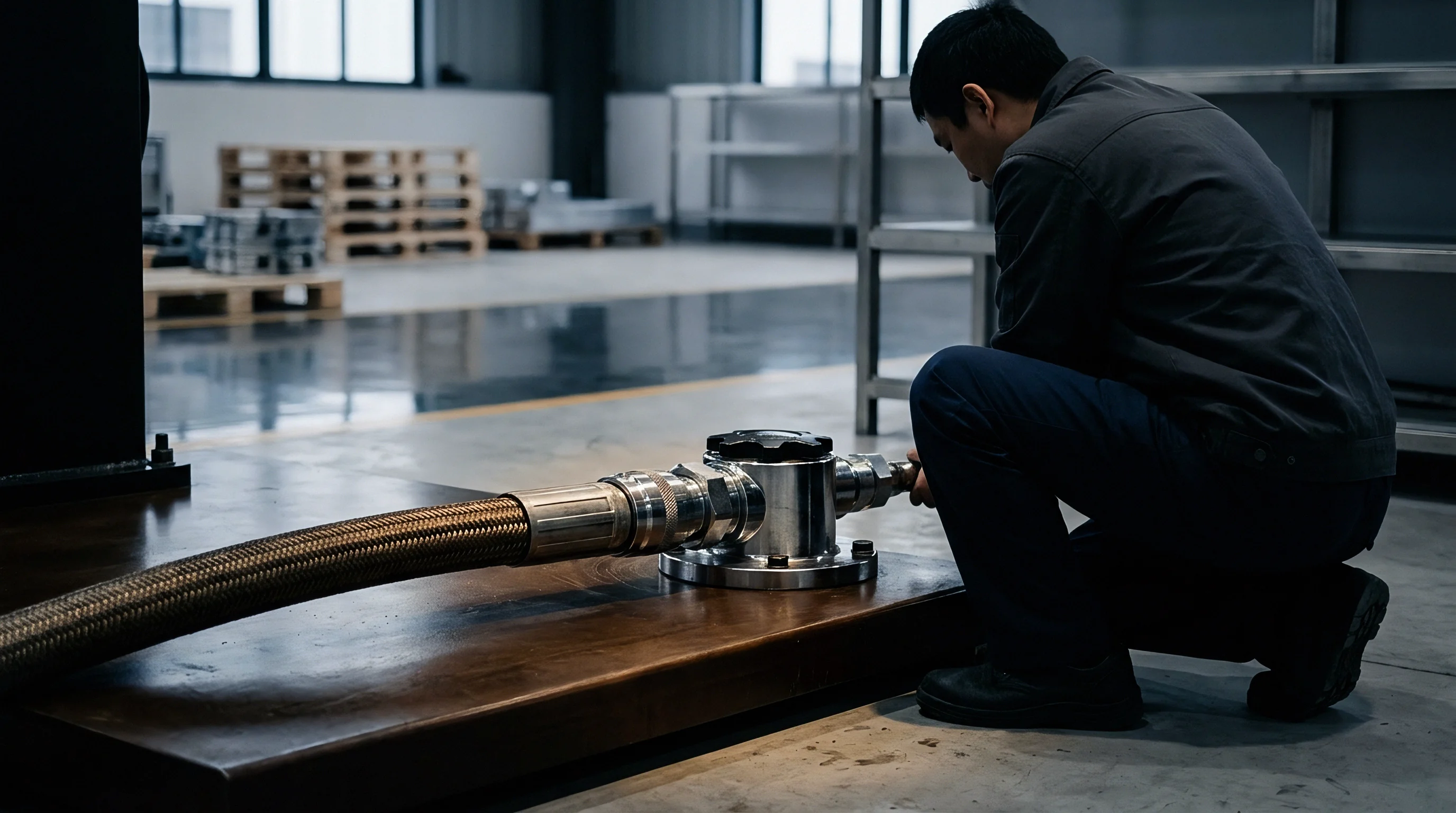
Fastener selection determines whether an asset plate survives unauthorized removal attempts by workshop personnel. Standard cross-head or hex-head machine screws invite quiet removal with hand tools during payment standoffs. Unilateral extraction by the foreign owner requires tamper-proof fastening hardware that deforms permanently upon seating.
Solid blind rivets made of Monel or 304 stainless steel expand within blind holes drilled into the tool base. Driving the central pin shears the mandrel flush, leaving a smooth, case-hardened head flush with the plate surface. Removing these rivets necessitates carbide drill bits and a stationary radial drill press, converting any unpermitted plate detachment into an intentional, traceable act of structural vandalism.
Physical attachment fails through specific mechanical and chemical vulnerabilities:
- Galvanic corrosion between dissimilar alloys accelerates oxidation when aluminum plates contact wet carbon steel bases in unconditioned coastal factories.
- Thermal expansion mismatch shears brittle epoxy adhesives when mold plates flex repeatedly under two thousand tons of hydraulic lockup force.
- Recoil shock vibration loosens threaded machine screws over fifty thousand continuous production cycles unless chemical thread-lockers secure the threads.
- Solvent vapor penetration dissolves resin binders within printed barcode tags, leaving blank metallic backing plates after ultrasonic cavitation cleanings.
Data Fields for Bilingual Enforcement Identification
The visual plate communicates legal status directly to domestic court bailiffs and customs officers. English text alone carries zero evidentiary weight during an expedited property preservation action inside a second-tier Chinese city. The plate presents all primary ownership claims in simplified Chinese characters alongside the foreign buyer name.
Text on the identification plate lists the precise corporate name of the foreign owner matching foreign business registration certificates. It displays the uniform social credit code of the authorized contract manufacturing facility, the unique serial number of the mold, and the specific bailment contract reference code. A flat statement declares that title remains with the overseas principal and explicitly cites Book Three, Title Twenty-Two of the PRC Civil Code.
Local enforcement officers read this notice during on-site asset seizures to segregate the tool from general factory inventory.
A supplier who cannot remove an identification plate without damaging the mold base will leave the plate in place.


Custody
Bailment under Chinese law operates under distinct statutory principles established in the PRC Civil Code. Articles 888 through 903 govern custody contracts, establishing that delivery of the bailed object transfers possession rather than property rights. Western supply contracts frequently merge tooling ownership clauses into general manufacturing purchase agreements.
This structural mistake allows defaulting suppliers to argue that mold retention constitutes a legitimate performance defense against disputed part purchase orders.
Bailment structures survive legal challenges when executed as standalone legal instruments entirely separate from parts manufacturing agreements. The custody contract names the foreign asset holder as the bailor and the local manufacturing entity as the bailee. The instrument specifies that physical custody serves only the specific purpose of pressing components under authorized purchase orders issued by the bailor.
Any secondary utilization, unauthorized subcontracting, or relocation to a third-party injection molding facility constitutes immediate conversion under the law.
Express inclusion of Article 897 of the PRC Civil Code strips the custodian of possessory lien rights during contract disputes.
Possession creates a presumption of title.

Statutory Boundaries of the PRC Civil Code
Article 888 defines custody as an agreement where the bailee takes charge of the object delivered by the bailor and returns it upon termination. Injection tooling worth three hundred thousand dollars requires explicit provisions regarding maintenance, tooling preservation, and wear depreciation. Under Article 892, the bailee cannot permit a third party to use or hold the bailed property without express written permission from the bailor.
The contract designates whether custody is gratuitous or compensated. Gratuitous custody exposes the bailor to relaxed liability standards under Article 897, holding the custodian liable for damages only in cases of deliberate intention or gross negligence. Compensated bailment, even when structured as a nominal annual custody fee of one hundred US dollars, elevates the custodian standard of care to normal negligence.
A compensated custody relationship forces the factory to pay full replacement damages if an uncooled cavity cracks during unattended overnight shifts.
Contract drafting requires specific structural provisions to withstand judicial scrutiny in domestic people’s courts:
- Explicit asset title declarations state that title remains permanently vested in the foreign bailor throughout all phases of design, fabrication, trial, and production.
- Mandatory tool usage parameters restrict cavity operations strictly to verified component part purchase orders signed by the designated overseas representative.
- Relocation restrictions prohibit shifting the mold between presses, buildings, or subsidiary facilities without fourteen days advance written consent.
- Unilateral termination triggers permit the asset owner to terminate custody immediately upon supplier default, insolvency, unauthorized downtime, or material quality drift.
Severance of Bailment from Production Supply
Cross-default drafting errors tie tool release to open commercial disputes over unit pricing or defect rates. When a master supply agreement contains both the product pricing terms and the mold custody terms, the factory attorney argues that non-payment of an invoice justifies retaining the mold under general contract defense doctrines. Severing the documents deprives the factory of this immediate countermeasure.
The standalone mold bailment contract establishes that the duty to return the tool remains independent of open supply invoice arguments. The text explicitly states that unpaid component claims must be resolved through independent legal actions without exercising self-help detention on capital tooling. The local court then views the tool recovery action as an uncomplicated ownership replevin proceeding rather than a convoluted supply-chain equity dispute.
The supplier signs the inventory schedule.

Drafted Access Rights and Extraction Mechanisms
Overseas buyers face locked factory gates the moment commercial negotiations sour. An enforceable bailment contract provides unambiguous inspection and audit access rights on seventy-two hours notice. The clause grants the bailor designated engineering agents unhindered physical access to the production line to audit shots, check tag integrity, and conduct physical mold maintenance checks.
The extraction clause outlines the logistical procedure for removing the tool. It permits the bailor or its designated logistics carrier to enter the facility, disconnect utility lines, unbolt the mold from the platen, and lift the assembly onto transport transport beds. The instrument includes an advance power of attorney authorizing local rigging contractors to enter the premises upon receipt of a certified default notice.
Specifying agreed liquidated damages for each day the supplier impedes extraction prevents local managers from fabricating logistical delays.
The bailment contract states that the custodian waives all possessory counterclaims against the equipment upon written termination notice, thereby eliminating local administrative defenses during factory floor recovery.

Lien
Statutory lien rights under Chinese commercial law represent the primary mechanism factories use to trap foreign tooling. Article 447 of the PRC Civil Code grants an unpaid creditor possessory lien rights over movable property legally held by that creditor. Article 448 creates a hazardous exposure for foreign buyers: commercial liens between enterprises do not require that the seized property relate directly to the unpaid debt.
A factory owed forty thousand dollars on an overdue resin shipment can lawfully seize a half-million-dollar multi-cavity injection die.
Article 448 permits contracting enterprises to exclude statutory commercial liens by mutual written agreement. Omitting an explicit waiver of Article 448 in the bilingual bailment contract gives the factory an immediate statutory right to hold the mold hostage. Chinese judges enforce lien waivers when the text contains clear, specific language referencing Article 448 and explicitly disclaims all commercial lien rights over the bailed equipment.
A factory facing insolvency pledges unmonitored customer dies to domestic creditors within days of missed payroll.
Unregistered tooling defaults to factory assets.

Commercial Withholding under Article 448
The statutory lien operates on physical custody. When an offshore buyer disputes rejected parts and withholds invoice payment, the domestic factory issues a notice of lien under Article 447. Once the lien attaches, the factory holds the mold as security until the dispute concludes or a court orders enforcement.
Resolving such disputes through litigation often consumes twelve to eighteen months, during which time seasonal product lines collapse.
Waiver clauses must define the exclusion comprehensively. The contract specifies that the factory waives all rights of detention, statutory commercial liens, retaining rights, and security interests arising under the PRC Civil Code or any other regional regulation. The clause confirms that this waiver applies unconditionally across all disputes involving part pricing, scrap rates, minimum order quantities, and facility storage fees.
The proportion of mold custody disputes where a supplier successfully asserts an Article 448 commercial lien despite an explicit contractual waiver sits around fifteen percent of lower-tier court filings. Published judicial statistics aggregate mold detentions into general contract defaults without distinguishing bailed tooling, leaving the true rate uncertain. A buyer manages this uncertainty by securing escrow retention accounts and executing physical audits rather than relying exclusively on judicial predictability.
| Claimant Category | Legal Basis | Priority Standing | Enforcement Outcome |
|---|---|---|---|
| Bailor with Registered Ownership | Civil Code Art. 888 and Bankruptcy Law Art. 38 | Superior to unsecured and general creditors | Immediate release via Right of Retrieval |
| Factory Commercial Lienholder | Civil Code Art. 448 without valid waiver | High priority over general enterprise assets | Tool held until underlying commercial claim is satisfied |
| Secured Creditor with Floating Pledge | Civil Code Art. 396 recorded via PBOC CRC | Defeats unregistered offshore bailment claims | Tool auctioned into bankruptcy estate asset pool |
| Local Labor and Tax Authorities | Enterprise Bankruptcy Law Art. 113 | Subordinate to valid third-party property claims | Cannot seize verified foreign-owned bailment assets |

Priority Conflicts across Competing Creditor Claims
Foreign owners face grave perils when a contract manufacturer enters insolvency. Secured domestic banks frequently hold broad enterprise floating pledges covering all machinery, equipment, raw materials, and semi-finished goods located within the factory walls. These floating mortgages register with the Credit Reference Center of the People’s Bank of China under Article 396 of the Civil Code.
A floating pledge legally absorbs all tooling physically situated on the factory floor unless the true owner establishes distinct third-party title. If the bailor fails to attach visible, tamper-proof bilingual asset tags and cannot produce an executed custody agreement, the bank’s registered mortgage attaches directly to the tool. Maritime salvage contracts under the 1989 London Convention operate on similar possessory friction, where salvors maintain physical retention over hulls in international waters until security bonds clear.
The commercial leverage in factory tooling operates on that identical possessory grip. Secured creditors take priority over unverified foreign title claims every single time.
Secured creditors seize unflagged shop assets.

Financial Accounting and Fixed Asset Registrations
Local factories frequently commit tax fraud by booking client-owned tooling as their own corporate fixed assets. Once an injection mold appears on the factory asset register, the company claims annual equipment depreciation against domestic enterprise income tax obligations. Auditors, tax inspectors, and bankruptcy administrators examine these corporate depreciation schedules during liquidation reviews.
A mold improperly booked on the factory depreciation schedule becomes presumptive property of the bankruptcy estate. The bailment contract counters this practice by requiring the factory to sign a formal non-capitalization certification. The supplier formally warrants that the tool will not enter its corporate books, fixed asset ledgers, or tax filings as enterprise property.
The buyer periodically requests stamped copies of the supplier audited asset ledgers to verify the exclusion.
We cannot release this production asset until our outstanding power bills and line adjustment expenses are settled in cash.


Eviction
Repossessing injection tooling from an uncooperative offshore supplier demands administrative preparation before any physical intervention occurs. Entering a factory compound with transport trucks without court authorization risks criminal trespass charges and violent resistance from local management. Lawful extraction relies on fast-tracked judicial preservation mechanisms designed to freeze and recover movable equipment before factory personnel disassemble cavities or damage cores.
Article 103 of the PRC Civil Procedure Law authorizes pre-litigation property preservation. This legal mechanism allows an overseas asset holder to request that a local people’s court seal, seize, or impound equipment before the formal lawsuit commences. Filing an effective preservation application requires producing the certified bilingual bailment contract, verified bank transfer records proving payment for mold fabrication, and photographic documentation showing matching asset tags affixed to the platen base.
Pre-litigation property preservation under Article 103 of the PRC Civil Procedure Law typically freezes contested production machinery within forty-eight hours when supported by an unencumbered cash security deposit equal to thirty percent of asset value.
The court officer impounds the tooling.

Pre-Litigation Preservation under Civil Procedure Rules
Speed determines success during tooling recovery actions. An uncooperative supplier who senses imminent repossession will transfer valuable multi-cavity dies to affiliated subcontract workshops within hours. Pre-litigation property preservation freezes the assets in place under official judicial authority.
Judicial asset preservation timelines operate on a 48-hour judicial turnaround under Article 103 of the Civil Procedure Law, resting on intermediate people’s court processing data from the Yangtze River Delta manufacturing corridors between 2021 and 2023. This timeline extends to twenty-one days if the applicant submits foreign corporate certificates lacking consular notarization or fails to post liquid bond collateral. The court requires a counter-guarantee bond, usually furnished as cash deposited into a court escrow account or as an asset preservation surety bond issued by an approved domestic insurer.
Executing an expedited property recovery sequence requires disciplined preparation:
- Documentary evidence certification requires translating foreign certificates of incorporation and powers of attorney into simplified Chinese, certified by local apostille or consular notarization.
- Security bond procurement secures an insurance guarantee bond matching thirty percent of the replacement value of the contested injection mold.
- Emergency preservation petition submits the formal application to the basic people’s court possessing geographic jurisdiction over the supplier factory compound.
- Physical court enforcement accompanies designated judicial enforcement marshals to the factory floor to identify asset tags and apply physical court seals.

Bilingual Inventory Logs as Admissible Proof
Domestic courts dismiss vague, non-specific claims regarding disputed equipment. The bailor must prove the exact identity, specifications, and physical location of the mold. General commercial invoices listing plastic injection tools lack the forensic detail needed to secure a judicial seizure order.
An admissible bailment dossier contains high-resolution color photographs showing the fully assembled mold, close-up images of cavity engraving, and clear photographs of the riveted stainless steel bilingual asset tag. The dossier includes an explicit technical delivery receipt signed and stamped with the supplier official corporate seal (gongzhang) at the time of initial commissioning. Without a stamped delivery receipt confirming the serial number and physical tag ID, judicial marshals will refuse to execute an eviction order over contested shop equipment.
Local courts require stamped original documents.

Physical Repossession and Logistics Extraction
Obtaining a favorable court order to unseal the tooling leads directly to the physical extraction phase. Heavy injection molds weighing between five and forty metric tons require specialized industrial handling equipment. Removing an automotive bumper mold or a medical syringe multi-cavity die requires overhead gantry cranes, heavy rigging crews, and dedicated heavy-haul flatbed trucks.
Local logistics contractors coordinate with judicial marshals to oversee disconnects. The extraction team disengages chilled water hoses, hydraulic core-pull lines, thermocouple wiring harnesses, and hot runner control manifolds without damaging internal electronics. Leaving the rigging to an adversarial supplier guarantees sheared locating rings, bent ejector pins, and corroded water channels.
Heavy rigging teams secure the mold halves with dedicated transport clamping bars to prevent internal cavity shifts during highway transit to a secondary facility.
Failing to secure court-ordered police accompaniment exposes extraction personnel to factory gate blockades and physical seizure of transport equipment by local labor groups.


Liquidation
Enterprise bankruptcy proceedings in offshore manufacturing hubs present the ultimate test of tooling ownership structures. When an injection molding supplier files for bankruptcy reorganization or liquidation under the PRC Enterprise Bankruptcy Law, general management authority transfers immediately to a court-appointed bankruptcy administrator. All ongoing civil execution actions, including pending property recovery actions, halt under Article 19 of the bankruptcy statute.
Unsecured creditors find themselves locked out of the facility while the bankruptcy administrator tallies company assets. Tools sitting on the factory floor without verified third-party registration are cataloged as bankruptcy estate property under Article 30. The foreign buyer cannot simply unbolt the tool and drive away; doing so constitutes illegal asset diversion under bankruptcy law.
Insolvency freezes all pending civil recovery.

Right of Retrieval under Enterprise Bankruptcy Law
The principal legal defense for a foreign buyer during supplier insolvency is the Right of Retrieval (quhui quan) under Article 38 of the PRC Enterprise Bankruptcy Law. Article 38 establishes that where property in the possession of the debtor does not belong to the debtor, the rightful owner has the legal right to retrieve that property through the bankruptcy administrator. Successfully asserting this right extracts the tool completely from the liquidation pool.
The asset owner files a formal retrieval demand with the bankruptcy administrator within the statutory creditor claim declaration period. The submission includes the standalone bailment contract, evidence of initial mold purchase payments, bilingual asset plate logs, and proof that the supplier excluded the tool from its corporate tax depreciation ledgers. If the administrator accepts the claim, the tool is released to the bailor without participating in general liquidation distributions.
If the administrator rejects the claim, the buyer files an asset confirmation lawsuit under Article 38 before the supervising bankruptcy court within fifteen days.

Administrator Scrutiny of Unsegregated Factory Assets
Bankruptcy administrators operate under statutory duties to maximize estate asset value for domestic unsecured creditors, local labor unions, and municipal tax bureaus. They scrutinize foreign ownership claims with rigorous skepticism. Any procedural defect in documentation invalidates the Right of Retrieval.
Administrators routinely reject retrieval claims where physical asset tags are missing, defaced, or inconsistent with contract schedules. If an injection die lacks a firmly riveted 316 stainless steel bilingual plate and instead displays only chalk markings or illegible barcodes, the administrator classifies the asset as debtor property. The burden of proving ownership rests entirely upon the foreign claimant.
Resolving an administrator rejection requires months of formal civil litigation while production lines stay frozen.
The magistrate inspects serial engravings directly.

Terminal Write-Down and Scrap Realities
Extracting a tool through bankruptcy litigation often proves economically futile if the legal battle outlasts the product lifecycle. Commercial tooling locked in an unheated, unpowered factory building during rainy seasons suffers rapid cavity corrosion from ambient humidity. Condensation accumulates on polished P20 cores, pitting mirror finishes and ruining multi-million-shot optical mold cavities within months.
A mold trapped in administrator deadlock for over a year frequently emerges as scrap metal. Re-polishing cavities, replacing corroded hot runner heater bands, and re-machining rusted slide guides approaches fifty percent of the original fabrication cost. A foreign principal must calculate whether the cost of post-recovery mold refurbishment, court litigation bonds, and domestic attorney fees exceeds the cost of cutting replacement steel at a secondary facility.
Whether local bankruptcy administrators intentionally prolong foreign retrieval reviews to extract storage fees from overseas buyers remains a contentious point among cross-border insolvency attorneys.