Defect Remedies under Primary Chinese Contract Law
PRC Civil Code Article 582 defect remedies enforce repair, replacement, return, or price reduction, provided formal written notice hits statutory Article 621 windows.

Statute

Civil Code Architecture for Non Conforming Goods
Primary contract governance in the People’s Republic of China rests within Book III of the Civil Code, which took effect on January 1, 2021, codifying rules previously split across the Contract Law and General Principles of Civil Law. When imported components, assemblies, or finished consumer items fail quality standards upon arrival, buyer rights stem directly from statutory breach provisions rather than common law precedents. Article 577 establishes strict breach liability: when a party fails to perform contractual obligations or performs inconsistently with agreed terms, that party bears remedial liabilities including continued performance, remedial measures, or monetary compensation.
Fault or negligence is not a required element to establish breach; the objective reality of non-conformity triggers liability.
Contractual terms override non-mandatory statutory defaults under Chinese jurisprudence, provided those terms clear standard form provisions and public policy boundaries. A purchase order that specifies technical drawings, tolerance bands, surface finish metrics, and explicit functional pass criteria creates an enforceable standard under Article 509. Goods fail without notice.
Where a contract leaves quality parameters ambiguous or undefined, Article 510 directs parties to reach a supplementary agreement. If negotiations fail, Article 511 applies statutory gap-fillers, mandating national standards (GB), industry standards, or standard commercial attributes customary for ordinary fitness for purpose.
The PRC Civil Code assigns default breach liability on strict objective non-conformity without requiring proof of factory fault.

Statutory Hierarchy of Remedial Rights
Substantive defect remedies appear primarily in Article 582 of the Civil Code. Where performance fails contract specifications and parties did not pre-determine remedy hierarchies, the aggrieved buyer holds the statutory right to select remedies based on the operational severity of the failure.
| Remedial Category | Statutory Legal Trigger | Commercial Mechanics | Financial Valuation Basis |
|---|---|---|---|
| Repair (XiuLi) | Minor non-conformity capable of local or factory rework | Seller modifies goods to meet specifications without changing unit volume | Seller absorbs direct labor, tooling, and transport costs |
| Re performance (ChongZuo) | Systemic rework required that alters core manufacturing operations | Seller re-executes total processing sequence on supplied raw materials | Original contract unit pricing remains fixed; seller absorbs scrap loss |
| Replacement (GuanHuan) | Irremediable physical or functional defects across entire lot | Seller manufactures new unit batch and ships to destination point | Full replacement manufacturing cost plus international freight duties |
| Return (TuiHuo) | Fundamental non-conformity making goods unusable for buyer purpose | Buyer rejects batch; goods returned or scraped locally upon agreement | Full refund of purchase price plus landed logistics expenditure |
| Price Reduction (JianJia) | Defects accepted by buyer subject to commercial discount | Buyer retains non-conforming batch for secondary use or down-market sale | Difference between contracted market value and actual non-conforming value |
Combining Article 582 remedies with damage claims under Article 583 remains a foundational strategic right for foreign buyers. Selecting repair or replacement does not waive the right to collect damages for delayed delivery or line-down costs caused by the initial defect. A supplier that takes thirty days to replace a rejected batch of circuit boards remains liable for late delivery penalties incurred during that thirty-day re-manufacturing window.
Contract drafters alter default statutory rights by inserting explicit liability caps and remedy priority clauses. The enforcing language must clearly state: “In the event of delivered goods non-conformity, buyer retains sole discretion under PRC Civil Code Article 582 to elect between factory re-performance, local third-party rework at seller expense, or immediate price reduction, without forfeiting concurrent delay claims under Article 583.”


Window

Timelines for Patent Defect Inspection
Receiving dock operations directly dictate whether legal defect rights survive post-delivery. Under Article 620 of the PRC Civil Code, the buyer must inspect delivered goods within the agreed inspection period. If the contract omits an explicit inspection timeline, Article 621 requires the buyer to notify the seller of quantitative or qualitative non-conformities within a reasonable period after discovering or reasonably should have discovered the defect.
The inspection clock starts on arrival. Chinese courts interpret “reasonable period” strictly when dealing with patent defects. Dimensional variance, wrong surface finish, incorrect packaging, visible cracking, and incorrect batch labels count as patent defects discoverable through ordinary incoming inspection routines like ANSI/ASQ Z1.4 sampling.
Allowing thirty days to elapse without written notification often results in a legal presumption under Article 621 Paragraph 1 that delivered goods conform entirely to contract specifications.
Written notice issued within the contractually defined inspection window preserves statutory rights under Article 621 regardless of pending payment status.

Latent Defect Exposure beyond Receiving Docks
Hidden engineering errors demand separate legal handling. Article 621 Paragraph 2 addresses latent defects, such as internal material voiding, printed circuit board trace delamination under thermal stress, or incorrect metal alloy composition, which standard receiving inspection cannot catch. Latent defects bypass visual acceptance.
When no quality guarantee period is defined, the statutory ceiling for notifying the seller of latent defects is two years from the date of physical delivery.
When parties incorporate an explicit quality guarantee period into the contract, that specific duration replaces the default two-year statutory ceiling. A twelve-month quality warranty period written into an OEM supply contract means latent defect claims expire twelve months after delivery, barring evidence that the seller intentionally concealed the defect with actual knowledge prior to dispatch.
- Conduct receiving inspection within five business days of port clearance, executing complete AQL Level II sampling protocols.
- Issue a formal written Notice of Non-Conformity directly to the seller’s legal address within forty-eight hours of defect detection.
- Itemize specific parameter failures using objective test metrics, referencing corresponding technical drawing callouts and contract purchase order numbers.
- Specify the required statutory remedy under Article 582 and assign a explicit seven-day window for seller written response.
- Preserve all transport documentation, customs clearance forms, sealed sample units, and digital inspection photos with embedded time stamps.
Written notice sent via registered mail or tracked international courier to the seller’s legal registered address creates an irrefutable timeline record that satisfies court standards. Relying on casual instant messaging application chats without formal corporate letters leaves foreign buyers vulnerable to seller claims that notice was never legally served within statutory limits.


Cure

Floor Mechanics of Repair and Replacement
Selecting the practical method to cure non-conforming goods requires weighing physical floor realities against legal entitlement. When a batch fails quality checks at an overseas destination, returning the entire shipment to a factory in Zhejiang or Guangdong introduces customs clearance barriers, import tariff liabilities, and substantial transport timelines. Chinese customs regulations treat returned exported goods under strict scrutiny to prevent tax evasion, requiring complex re-importation paperwork (TuiYun procedures) that can delay factory arrival by eight to twelve weeks.
Local third-party rework presents a faster alternative when components require superficial modification or sorting. Under Article 582, the buyer may execute third-party rework locally and bill the actual costs to the seller, provided the buyer notified the seller and gave reasonable opportunity for direct cure first. Repair costs sit with the seller.
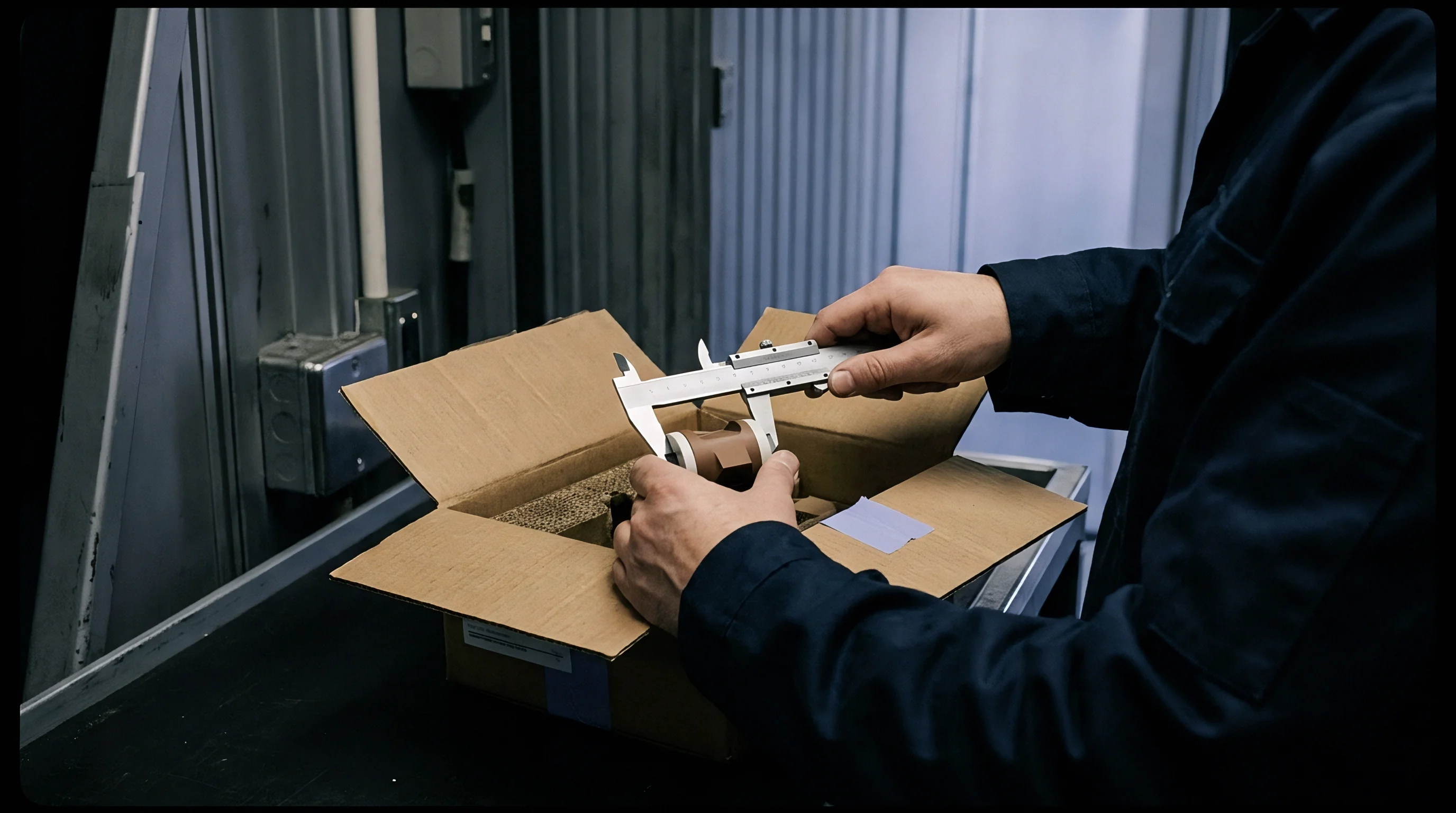
Consider a practical engineering scenario involving 50,000 unit CNC-machined aluminum mounting brackets priced at 14.00 USD per unit, delivered to a North American assembly line. Incoming inspection reveals 8% of the batch exceeds bore diameter tolerances by 0.05 millimeters, rendering those specific units unmountable without secondary line reaming.
| Cure Approach | Direct Financial Outlay | Schedule Delay Impact | Secondary Risk Exposure |
|---|---|---|---|
| China Factory Return and Replace | 11,200 USD return freight plus customs duty bonds | 60 to 90 calendar days line downtime | High risk of customs clearance rejection at Chinese border |
| Local Third-Party CNC Sorting and Reaming | 4,000 units processed at 2.20 USD local labor rate = 8,800 USD | 5 business days local turnaround | Minor risk of localized tool chatter affecting surface finish |
| Commercial Price Discount Acceptance | 4,000 defective units discounted by 50% unit value = 28,000 USD credit | Zero calendar days delay | Requires buyer facility to absorb custom rework internally |
Price Reduction Arithmetic under Partial Conformity
Calculating equitable price reductions requires transparent baseline market values. Price reductions require objective valuation baseline. Under Article 582, the price reduction formula evaluates the ratio between the market value of conforming goods at the time of contract performance and the actual market value of non-conforming goods delivered.
Value reduction equals contracted total value multiplied by one minus the fraction of non-conforming value divided by conforming value. If 50,000 brackets carry a contracted price of 700,000 USD, but due to internal bore variance the secondary market value of the non-conforming units drops to 7.00 USD per unit for those specific 4,000 pieces, the price reduction calculation isolates the specific delta. The calculation deducts 28,000 USD directly from pending balance payments or demands direct repayment from the seller.
Faced with non-conformity claims backed by third-party dimensional reports, a factory legal manager typically responds: “The goods met factory gate parameters prior to loading, so shipment vibration caused tolerance shifts outside our liability scope.”


Clamp

When Does a Partial Batch Defect Trigger Full Cancellation?
Contract cancellation (Hetan Jiechu) under PRC Civil Code Article 563 represents the ultimate legal remedy when non-conformity destroys the commercial purpose of the agreement. A buyer holds statutory grounds for contract cancellation when delivered defects constitute a fundamental breach (Genben Weiyue). A fundamental breach occurs when non-conforming performance prevents the buyer from achieving the main commercial objective contemplated under the agreement.
A contract cancellation terminates future delivery. Delivering a 12% defect rate on customized, single-use structural components for a fixed-date infrastructure project constitutes fundamental breach if replacement cannot occur prior to the project milestone. The buyer can terminate the unperformed balance of the contract, return previously delivered defective lots, and demand full monetary restitution.
Executing contract cancellation requires adhering to systematic operational criteria to prevent retaliatory breach claims from the supplier.
- Documented Failure Threshold establish through certified laboratory testing that non-conformity exceeds agreed scrap limits across multiple production lots.
- Formal Cure Notice issue a written demand under Article 563 granting a final, reasonable re-performance deadline that the seller fails to meet.
- Commercial Frustration Proof demonstrate in writing that delivery delays directly render the broader product assembly unmarketable or obsolete.
- Termination Notice Delivery transmit an unequivocal written Declaration of Contract Cancellation detailing specific statutory breach articles.
A contract cancellation notice takes legal effect upon proper service to the breaching party under PRC Civil Code Article 565.

Foreseeability Caps on Consequential Losses
Monetary damage claims following contract breach follow Article 584 of the Civil Code. Damages include direct losses incurred alongside lost profits that would have been realized had performance conformed to terms. Chinese legal policy enforces a strict foreseeability rule: compensation cannot exceed the total financial losses that the breaching party foresaw or ought to have foreseen at the time of contract execution.
Chinese tribunals reject speculative profits. Foreign buyers attempting to claim massive downstream brand damages, lost enterprise valuation, or third-party retail cancellation penalties usually fail in Chinese courts unless those specific damage categories were explicitly detailed inside the contract body or pre-contract risk disclosures. Liquidated damages require judicial adjustment.
Article 585 allows parties to agree upon fixed liquidated damages (Weiyuejin) for non-conformity breaches. If agreed liquidated damages fall significantly below actual incurred losses, a court or arbitration panel may increase the award upon buyer application. Conversely, if agreed liquidated damages exceed actual incurred losses by more than 30%, Chinese judges routinely reduce the penalty down to reasonable direct loss figures plus a moderate margin, treating excessive penalties as unenforceable under PRC civil law principles.
Failing to explicitly itemize potential downstream assembly downtime costs inside the contract contractually shields the supplier from secondary line-down damages when components fail receiving inspection.


Paperwork
Bilingual Acceptance Protocols and Sealed Samples
Documentary evidence determines the outcome of supply chain disputes before Chinese courts or arbitration agencies like the China International Economic and Trade Arbitration Commission (CIETAC). Unsigned reports yield zero legal leverage. Foreign buyers relying solely on internal quality control spreadsheets translated into English frequently see their claims rejected due to evidentiary foundational flaws.
Golden samples (Shouyang) establish the physical baseline for material appearance, color tolerance, texture, and feel where written drawing callouts are incomplete. To maintain evidentiary status under Chinese evidence rules, golden samples must be sealed in duplicate at the factory site, signed by legal representatives of both companies, stamped with corporate seals (Gongzhang), and held securely by each party. Presenting an unsealed, unstamped reference sample in court allows the supplier to deny its authenticity.
Bilingual contracts and acceptance certificates require precise language priority rules. Under Chinese law, where a contract contains Chinese and foreign language versions, both carry equal legal force unless the contract specifies that one language prevails. Foreign buyers must specify that the Chinese text controls legal interpretation, ensuring technical terms translate accurately into Chinese engineering standards (GB standards) to prevent linguistic ambiguity during court enforcement.

Evidentiary Weight of Independent Laboratory Audits
Unilateral quality test reports generated by a buyer’s internal laboratory carry low evidentiary weight in Chinese legal proceedings. Chinese tribunals favor independent, accredited third-party inspection agencies operating within China, such as SGS, TÜV Rheinland, Intertek, or China Certification & Inspection Group (CCIC).
Notarial evidence carries high evidentiary weight. Article 93 of the PRC Civil Procedure Law grants elevated evidentiary credibility to notarized documents. Obtaining legally admissible evidence of defective goods located inside China requires hiring a Chinese public notary (Gongzhengchu) to attend the receiving warehouse, observe sample extraction, and notarize the sealing and shipment of test samples to an accredited testing laboratory.
This process, known as Evidence Preservation Notarization (Zhengju Baoquan Gongzheng), prevents the supplier from claiming that tested samples were tampered with or substituted.
Notarized evidence preservation executed by a Chinese public notary creates irrebuttable factual presumptions regarding sample condition during tribunal hearings.
Does the foreign buyer possess legally notarized proof that non-conforming samples extracted from the destination warehouse originate strictly from the specific production lot referenced on the disputed commercial invoice?

Ledger

Payment Set off Mechanisms and Cash Control
Retaining financial control provides the most practical defense against defective shipments. Foreign buyers operating across borders often find enforcing court judgments against small-to-medium Chinese suppliers commercially unviable due to litigation costs and enforcement timelines. Employing contractual set-off mechanisms under Article 568 of the PRC Civil Code offers immediate financial protection.
Article 568 authorizes statutory and contractual offset: where parties owe mutual matured obligations of similar type, either party may offset its obligation against the other party’s obligation, provided statutory exceptions do not apply. Offset clauses protect cross border cash. Inserting an explicit set-off clause into standard procurement agreements allows buyers to deduct documented defect costs, third-party rework invoices, or agreed liquidated damages directly from open balance payments on future incoming production lots.
Freight costs remain non refundable. When executing set-offs, buyers must maintain precise ledger entries linking each financial deduction directly to a specific Notice of Non-Conformity, third-party inspection report, and calculating schedule, preserving transparency for audit and legal review.
Commercial Enforcement and Settlement Realities
Cross-border dispute resolution economics dictate commercial negotiation strategy. Resolving a supply dispute through formal arbitration before CIETAC or litigation in a Chinese People’s Court typically requires six to eighteen months and direct expenditures between 15,000 USD and 50,000 USD in legal fees, translation costs, notary fees, and tribunal filings.
| Dispute Vector | Formal Court Litigation | CIETAC Arbitration | Contractual Offset Settlement |
|---|---|---|---|
| Direct Administrative and Legal Cost | 20,000 USD to 45,000 USD | 15,000 USD to 35,000 USD | 500 USD to 2,000 USD (Notary and Lab fees) |
| Timeline to Resolution | 12 to 24 months | 6 to 12 months | 10 to 30 calendar days |
| Recovery Realization Rate | 40% to 70% post enforcement | 60% to 85% voluntary compliance | 100% via immediate cash retention |
| Supplier Relationship Preservation | Complete commercial termination | Complete commercial termination | Moderate potential for contractual restructuring |
Direct commercial offset tied to objective third-party lab verification remains the most efficient cost recovery mechanism for foreign brands operating cross-border supply chains. Structuring supply agreements with 30% advance deposit and 70% balance payment due only after final destination inspection clearance creates the physical liquidity margin necessary to execute set-offs without entering lengthier court proceedings. Defect remedies under Chinese law function effectively only when embedded directly into weekly operating cadences, receiving inspection procedures, and cash control workflows long before non-conforming freight arrives at the destination dock.