Calculating Air Freight Chargeable Weight Penalties in Factory Delays
Factory delays force air freight upgrades where volumetric weight inflation compounds freight rates, requiring precise chargeable weight debit note calculations.


Cube
Dimensional weight calculations govern modern air freight billing by establishing a floor for space utilization. Airlines sell cargo space based on volume rather than pure physical mass whenever a shipment occupies significant hold capacity relative to its gross weight. Freight forwarders apply a standardized volumetric conversion factor to convert cubic measurements into billable mass.
Understanding this mechanism provides the foundation for evaluating penalty costs incurred when factory production slips force a transport mode switch from ocean containers to air lift.

Standard Volumetric Ratios in Air Cargo
Air cargo carriers apply the International Air Transport Association volumetric ratio to determine billable weight on all international flights. The universal baseline equates one cubic meter of cargo space to 166.67 kilograms of chargeable weight, calculated using a dimensional factor of 6,000 cubic centimeters per kilogram. Express parcel couriers utilize a tighter factor of 5,000 cubic centimeters per kilogram, raising the equivalent billable weight to 200 kilograms per cubic meter.
Space governs cargo pricing.
The International Air Transport Association standard conversion factor of 167 kilograms per cubic meter rests on cargo hold volumetric constraints of standard wide-body passenger and freighter aircraft. Airlines modify this ratio downward to 143 kilograms per cubic meter for specialized heavy-lift charters or upward to 200 kilograms per cubic meter during peak express shipping periods. Freight charges assess whichever figure proves higher between physical scale weight and calculated volumetric weight.
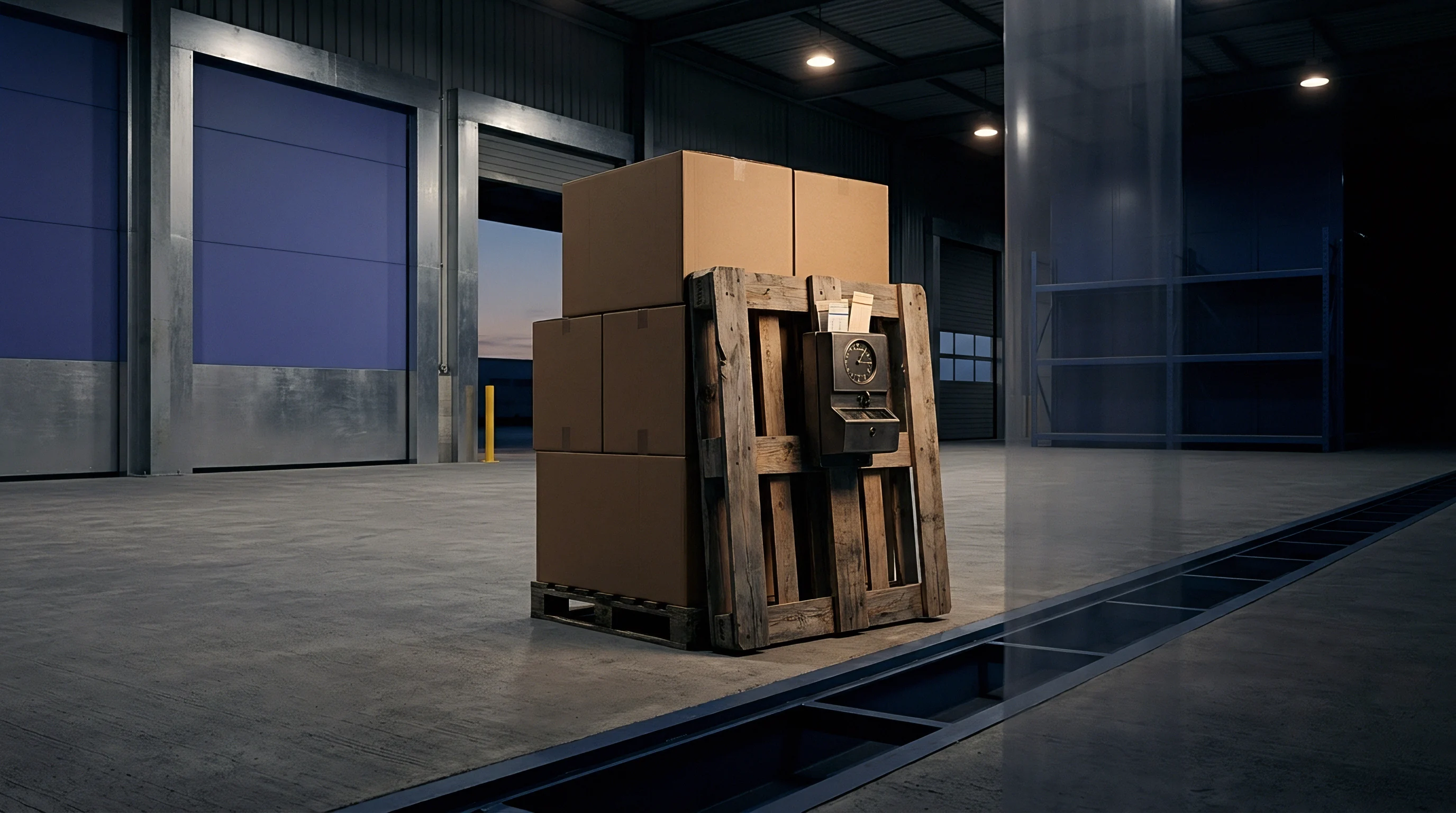
The Cubic Volumetric Conversion Mechanism
Physical density determines whether a shipment bills based on its reading on the scale or its spatial displacement. High-density cargo such as bare metal castings or dense electronic components occupies minimal space relative to mass, billing directly on actual gross kilograms. Consumer goods, textiles, packaged electronics, and plastic assemblies frequently fail to meet the density threshold of 167 kilograms per cubic meter.
Mass alone proves insufficient.
| Transport Mode | Dimensional Factor (cm³/kg) | Cubic Meter Mass Equivalent | Primary Billing Driver |
|---|---|---|---|
| Standard Air Freight (IATA) | 6,000 | 166.67 kg | Max(Gross Weight, Volumetric Weight) |
| Express Courier (Integrator) | 5,000 | 200.00 kg | Max(Gross Weight, Volumetric Weight) |
| Ocean Freight (LCL Baseline) | 1,000 | 1,000.00 kg | Max(Gross Weight in MT, Volume in CBM) |
| Road Feeder Service (Trucking) | 3,000 | 333.33 kg | Volumetric Space Allocations |
Ocean freight rules bill less-than-container shipments based on one metric ton per cubic meter, granting lightweight goods a broad volumetric buffer. Transitioning cargo from ocean to air alters this baseline by a factor of six. A pallet measuring one cubic meter weighing 100 kilograms bills as one volumetric ton on an ocean bill of lading baseline, but generates 167 kilograms of chargeable air freight weight.
Factory delays alter dimensions.
Air cargo billing defaults to external volume whenever dense packaging gives way to light structural air space.
Calculating the true baseline requires measuring every master carton along its outer extremes, including corner bulges and tape ridges. Skipping precision measurement at the factory gate leaves buyers vulnerable to terminal carrier adjustments. Cargo space pricing reflects physical reality rather than purchase order estimates.
When low-density packaging meets premium air lift, cubic space governs the cargo invoice long before the physical scale registers gross weight.


Slippage
Production timelines in export manufacturing maintain narrow buffer windows before late ocean container gate-in cutoffs force cargo rerouting. A schedule delay at the assembly stage eliminates ocean transit options when customer delivery commitments or retail launch dates remain fixed. The decision to convert ocean freight to air transport occurs when the cargo ready date breaches the port gate-in window.

Schedule Degradation along the Production Line
Component stockouts and assembly bottlenecks delay cargo readiness past established shipping windows. A five-day slip on a sub-assembly line propagates directly into missed ocean feeder vessel connections. Ocean carriers enforce strict terminal cutoffs, typically 48 to 72 hours before vessel departure.
Missing a feeder vessel cutoff cascades into a seven-day delay for the next scheduled ocean sailing.
Factory management monitors production output through daily quantity tracking across final assembly lines. When daily yields drop below planned targets, recovery requires operating additional shifts or reallocating labor. Unresolved line stoppages force managers to acknowledge that ocean container loading deadlines cannot be met.
Speed destroys box geometry.

Escalation Sequences Following Missed Feeder Cutoffs
Factory managers issue delay notices when final quality inspections fail to clear before port delivery cutoffs. Identifying the exact moment of schedule breakdown determines which commercial entity bears financial responsibility for transit acceleration. Systematic event tracking establishes the timeline preceding the mode switch.
- Cargo Ready Date Breach occurs when the production line finishes goods past the agreed purchase order deadline, missing the designated ocean container consolidation window.
- Impact Assessment Review evaluates downstream port cutoffs, vessel departure schedules, and customer delivery penalties to confirm whether air freight conversion is required.
- Transport Mode Conversion cancels existing ocean bill of lading bookings and secures booking confirmation on commercial air carriers or charter flights.
- Emergency Packaging Adaptation shifts packing lines from heavy ocean palletization to lightweight, air-compliant carton configurations to limit excess mass.
Factory management frequently explains that minor line recalibrations forced carton hand-packing, promising that physical mass remains identical despite expanded box outlines.


Differential
Switching export freight from ocean containers to air transport introduces two compound cost increases. The first component represents the base rate delta between ocean LCL freight charges and per-kilogram air uplift rates. The second component represents the volumetric expansion penalty, caused by applying air freight dimensional conversion factors to packaging designed for ocean container transport.

Why Does Dimensional Weight Creep during Factory Delays?
Rushed assembly operations frequently skip automated box compression procedures. Under schedule stress, packing operators pack master cartons by hand, failing to apply structural box corner braces or uniform vacuum sealing on soft goods. Loose internal packing allows carton walls to bow outward during stacking and transit.
Outer dimensions expand when internal goods shift. An outward bulge of just two centimeters on each face of a master box increases measured volume significantly. Across a 500-carton shipment, this subtle expansion inflates the total cubic meter footprint, triggering dimensional weight penalties on the carrier air waybill.
Laser gates measure everything.
Mathematical Calculation of Chargeable Weight Premiums
A baseline commercial shipment demonstrates how volumetric weight inflation compounds freight surcharges. Assume a factory order of 500 master cartons containing consumer electronics accessories. The actual gross weight measured on a physical scale equals 4,200 kilograms.
Under normal ocean packaging specifications, each master carton measures 0.50 m × 0.40 m × 0.285 m, yielding a individual carton volume of 0.057 cubic meters and a total shipment volume of 28.5 cubic meters.
Under ocean LCL pricing at $110 per cubic meter, the base freight charge totals $3,135.00. Late production forces an emergency shift to scheduled air freight at an agreed air rate of $4.80 per kilogram. If the cartons maintain exact ocean dimensions, the dimensional weight equals 28.5 cubic meters multiplied by the IATA factor of 166.67 kilograms per cubic meter, resulting in 4,750 kilograms of chargeable weight.
Because 4,750 kilograms exceeds the physical weight of 4,200 kilograms, the carrier bills for 4,750 kilograms, producing an air freight cost of $22,800.00.
Under factory delay conditions, rushed hand-packing causes carton sides to bulge. The measured external dimensions expand to 0.52 m × 0.42 m × 0.293 m per box. Individual carton volume increases to 0.064 cubic meters, raising total shipment volume to 32.0 cubic meters.
Applying the IATA volumetric factor converts 32.0 cubic meters into 5,333.44 kilograms of chargeable weight. Chargeable weight exceeds physical weight by 1,133.44 kilograms.
| Carton Expansion Profile | Shipment Volume (CBM) | Billable Mass (kg) | Total Air Freight Invoice | Cost Variance vs Baseline Air |
|---|---|---|---|---|
| Nominal Ocean Packaging (0% Bulge) | 28.50 | 4,750.00 | $22,800.00 | Baseline Air Cost |
| Minor Bulge (+2% Dimensional Shift) | 30.24 | 5,040.00 | $24,192.00 | +$1,392.00 |
| Moderate Bulge (+5% Dimensional Shift) | 32.00 | 5,333.44 | $25,600.51 | +$2,800.51 |
| Severe Bulge (+8% Dimensional Shift) | 35.88 | 5,980.00 | $28,704.00 | +$5,904.00 |
The cost calculation isolates three distinct cost layers generated by the factory delay:
Base Ocean Freight Baseline = $3,135.00
Uninflated Air Freight Differential = $22,800.00 – $3,135.00 = $19,665.00
Dimensional Weight Creep Penalty = (5,333.44 kg – 4,750.00 kg) × $4.80 = $2,800.51
Total Air Freight Invoice Incurred = $25,600.51
Net Financial Loss from Delay = $25,600.51 – $3,135.00 = $22,465.51
The volumetric packaging shift adds a $2,800.51 surcharge on top of the $19,665.00 mode-switch penalty. Expressed as a percentage, carton distortion increases the freight upgrade cost by 14.2 percent beyond the anticipated air freight estimate. Late production combined with careless box assembly multiplies financial liabilities rapidly.


Tare
Corrugated shipping cartons experience physical expansion when factory packing workers assemble master boxes by hand under extreme time pressure. Structural performance depends directly on fluting integrity, wall thickness, and moisture levels within the corrugated paperboard layers. Workshop floor execution determines whether cartons maintain specified geometric outlines under pallet compression.

Dimensional Distortion in Rushed Packaging Assembly
Irregular folding lines and uncompressed inner dividers expand the outer profile of master boxes. In South China manufacturing hubs during monsoon periods, ambient humidity weakens corrugated paperboard, reducing vertical stacking strength. High atmospheric moisture softening the starch adhesive between paper flutes causes master carton walls to bow outward when stacked five high on waiting staging pallets.
Factory workers rushing to clear export staging bays skip tape-tensioning checks. Loose application of polypropylene packaging tape allows top flaps to tent upward by one to two centimeters. Air cargo acceptance scanners record this raised edge as the maximum height across the entire box surface, calculating total volume from the single highest peak point.
Bulging cartons increase volume.
Field measurements confirm that double-wall corrugated cartons subject to hand-packing under rush conditions experience an average dimensional expansion factor of 5 percent. This 5 percent figure rests on physical audits conducted at export staging facilities in Shenzhen and Dongguan across paperboard packaging weights between 175 and 250 grams per square meter. Applying automated strapping units reduces bulge expansion to under 1 percent, whereas unbraced single-wall boxes exceed 9 percent expansion under humid climate conditions.

Terminal Laser Audit Mechanics
Air cargo receiving facilities pass incoming master pallets through automated optical scanning gates. These volumetric measuring systems utilize infrared laser arrays to capture the precise three-dimensional bounding box of every piece of cargo. Laser gates measure the widest, longest, and highest points across the entire outer silhouette.
International air transport association rules enforce laser volumetric scanning at acceptance terminals to capture carton bulge before loading.
- Corner Flap Tenting occurs when top sealing tape lacks uniform tension, raising the measured height profile across the entire pallet footprint.
- Side Wall Bulging results from internal void space where unbraced contents apply outward force against structural corrugated walls.
- Pallet Overhang happens when master cartons extend past the outer edges of wooden pallet bases, forcing terminal operators to bill for the expanded shadow footprint.
- Banding Compression Failure occurs when plastic strapping lacks sufficient tensile force to compress soft inner packaging prior to laser scanner measurement.
Discrepancies between factory packing list dimensions and terminal audit receipts trigger immediate re-weighting surcharges. Freight forwarders automatically recalculate air waybill charges based on terminal laser scanner data. The buyer receives an updated invoice reflecting the expanded dimensional weight without prior notice.
Rushing uncompressed corrugated boxes through cargo terminals triggers maximum volumetric rate tiers across the entire bill of lading.


Contract
Commercial purchasing agreements assign financial liability for schedule breaches through explicit freight upgrade provisions. Without specific contract language governing air freight conversions, buyers face lengthy disputes over who pays for mode shifts. Well-structured purchase order addendums establish clear financial accountability before production commences.

Split Cost Allocation Rules for Schedule Breaches
Negotiated supply agreements split air freight upgrade costs between buyers and vendors according to delay severity. Standard commercial contracts mandate that if a factory misses the agreed cargo ready date without prior written authorization, the vendor pays the entire delta between ocean freight baseline costs and incurred air freight charges. Contracts frequently define whether this responsibility includes volumetric penalties.
Commercial contracts specify liability boundaries using explicit calculation rules. The vendor assumes financial responsibility for the baseline ocean-to-air rate differential plus all dimensional weight premiums resulting from non-compliant packaging. Incorporating precise packaging specifications into purchase orders prevents vendors from disclaiming volumetric penalty charges.
Freight forwarders bill volume.

Liability Boundaries in Purchase Order Addendums
Cap structures set upper boundaries on vendor financial penalties resulting from late factory releases. Chinese manufacturing contracts often incorporate explicit penalty caps limiting a factory’s total late-delivery liability to a fixed percentage of total purchase order value, commonly between 15 and 30 percent. When air freight upgrade charges exceed this cap, disputes arise over who absorbs the excess freight invoice balance.
Contractual penalty caps pegged at fifteen percent of purchase order value regularly leave buyers absorbing residual air freight volumetric premiums.
Commercial negotiation data indicates that Chinese factories voluntarily absorb between 30 percent and 70 percent of late air freight upgrade costs during informal dispute resolution. The precise allocation depends heavily on historical relationship length, ongoing purchase order volume, and factory gross profit margins on the affected goods. Operating under this financial uncertainty, prudent buyers secure formal debit note acceptance before issuing subsequent production deposits.
- Review purchase order terms to verify that cargo ready date deadlines carry binding financial remedies.
- Audit air freight terminal waybills to separate base weight charges from volumetric dimensional expansion surcharges.
- Calculate net freight liabilities by subtracting baseline ocean transport estimates from total air forwarder invoices.
- Issue formal commercial debit notes offsetting validated freight penalties against pending accounts payable balances.
Standard supply agreements incorporating strict volumetric deficit allocation clauses convert dimensional weight overruns directly into binding vendor account liabilities.


Deduction
Recovering late-shipment air freight penalties requires immediate commercial execution before final invoice settlement. Finance teams process freight penalty recoveries by issuing formal debit notes against pending vendor accounts payable. Executing recoveries through direct offset prevents extended international legal disputes over uncollected freight debts.

Short Payment Mechanics against Open Payable Invoices
Commercial accounts payable teams issue formal debit memos against active balance sheets. When a factory delay forces an emergency air freight conversion, the buyer calculates the total cost differential, including volumetric penalties, and deducts that exact amount from open invoices for subsequent production runs. Holding open payables provides the primary leverage for securing penalty enforcement.
Contracts decide penalty shares.
Deductions require supporting documentation to withstand vendor audits. A complete deduction package includes the original ocean booking confirmation, the actual air freight invoice, the terminal laser measurement certificate, and the mathematical calculation sheet proving the volumetric penalty delta. Providing structured documentation reduces friction during quarterly account reconciliations.
Reconciliation Audits before Final Batch Settlement
Finance teams cross-check carrier freight bills against factory delay logs before closing accounting periods. Internal audit routines verify that freight forwarder invoices match approved rate cards and that dimensional weight inflation charges trace back to specific factory packaging failures. Systematic cross-checking catches erroneous carrier surcharges before back-charging vendors.
Commercial debit notes offset against subsequent production runs offer the only immediate financial recovery for delay penalties.
Factories facing substantial debit notes may pause production on active orders or withhold finished goods shipments. Managing commercial leverage requires balancing penalty recovery against ongoing supply chain continuity. Staggering debit note offsets across multiple future shipments prevents cash flow shocks that could disrupt vendor operations.
Deductions protect cash flow.
Uncollected penalties become losses.
Whether tier-two component suppliers accept back-charged air freight penalties without slowing future material releases remains an operational variable in every cross-border recovery strategy.