Customs Valuation Reconciliation Protocols for Import Goods with Embedded Royalties
Declare embedded royalties under GACC Bulletin 2019 No. 58, unbundle domestic services, and file supplementary declarations within 30 days to prevent fines.


Nexus
Customs authorities in China assess embedded intellectual property fees under a strict statutory dual test governing import valuation. Under General Administration of Customs (GACC) Decree No. 213, titled Measures of the Customs of the People’s Republic of China on the Determination of Dutiable Value of Imported and Exported Goods, licensing payments and royalties are added to the transaction value of imported cargo only when two conditions are met simultaneously: the royalty payment must relate directly to the imported physical goods, and paying it must constitute a legal condition of sale for importing those goods into the mainland territory. GACC Bulletin 2019 No. 58 enforces this test by requiring importers to disclose on every declaration form whether royalty liabilities apply to the declared lot, a distinction that directly determines the final duty rate.
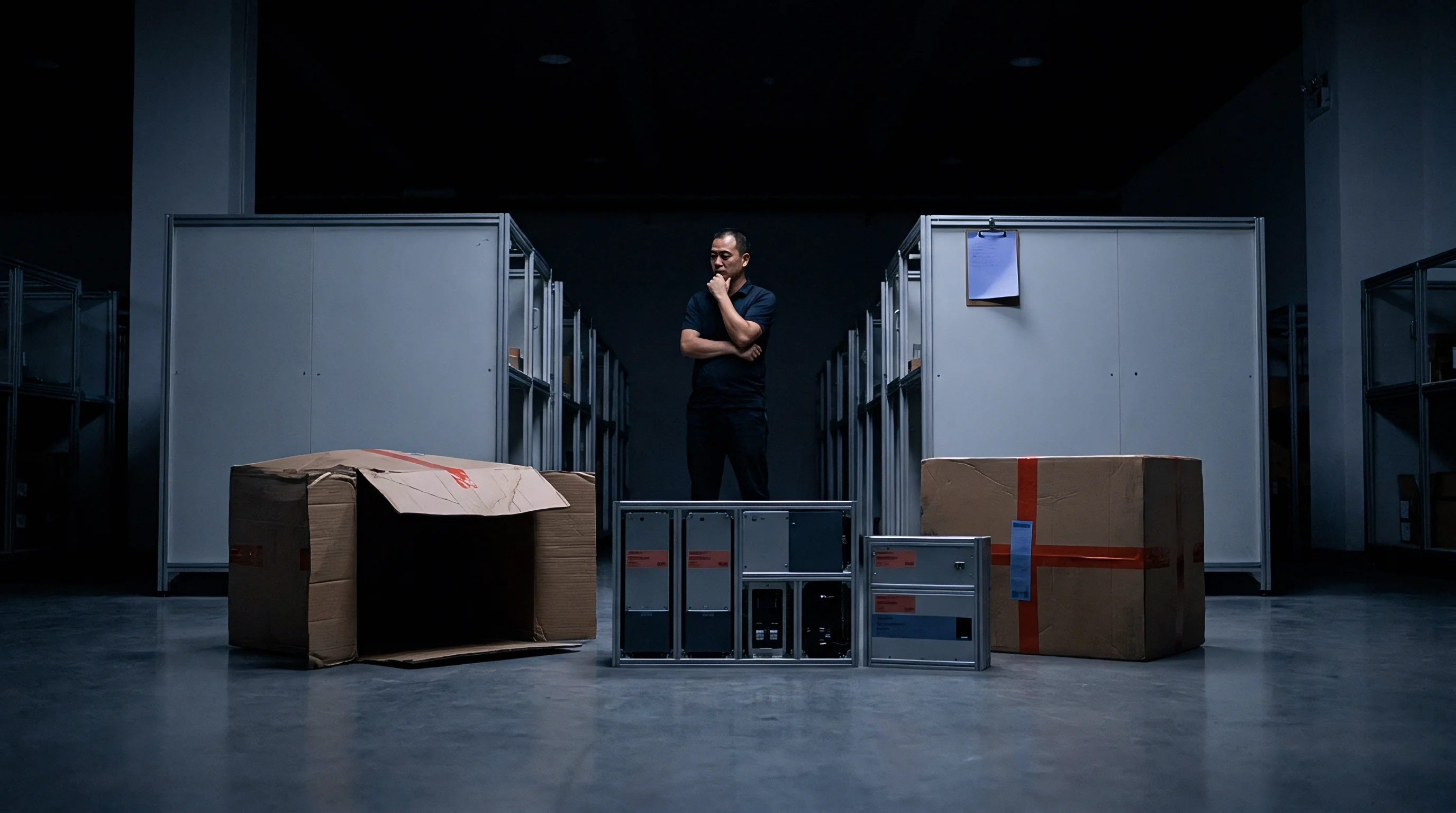
Statutory Criteria under Customs Decree Two Hundred Thirteen
The legal inquiry centers on whether technology license fees fall within customs dutiable value. Under Article 13 of GACC Decree No. 213, a royalty relates to imported goods if it covers patented processes, proprietary designs, copyrighted material, or trade secrets built into the manufacture or operation of the imported item. When machinery cannot function without proprietary firmware or licensed system architecture, customs officials automatically treat the corresponding fee as part of the physical cargo.
Article 14 then applies the condition of sale standard: if an overseas vendor will not transfer physical equipment unless the mainland buyer executes a companion licensing agreement, the license fee constitutes a mandatory condition of sale, bringing embedded firmware licenses directly into dutiable value.

Condition of Sale Interpretations in Port Practice
Port inspectors focus on whether an importer can lawfully take delivery of physical cargo without executing the licensing contract. When an overseas parent entity invoices hardware locally while billing software licenses or technology access fees through an offshore affiliate, mainland customs authorities routinely collapse the transaction structure. If the equipment purchase depends on executing that affiliate license, the full licensing sum is consolidated into the hardware’s customs value.
Because importers carry the statutory burden of proof, showing that goods can run independently or be sourced elsewhere without the license remains the standard defense against a condition of sale finding.
| IP Category | Dutiability Status under GACC Decree 213 | Assessment Basis | Exemption Conditions |
|---|---|---|---|
| Manufacturing Patent Licenses | Dutiable | Added to transaction value of imported components or machinery | Patent utilized exclusively in post-importation domestic processing without restricting import rights |
| Embedded Firmware and Software | Dutiable | Combined with physical hardware valuation unless medium is itemized | Standard commercial off-the-shelf software billed separately on distinct non-hardware contracts |
| Trademark Licensing Fees | Non-Dutiable (Conditional) | Excluded if unlinked to imported physical component manufacturing | Importer purchases hardware independently without requiring trademark usage authorization |
| Technical Support and Training | Non-Dutiable | Excluded as post-importation domestic service costs | Service charges clearly segregated from hardware purchase prices on commercial documentation |
A contract clause stipulating that hardware delivery remains fully valid and enforceable regardless of whether the buyer signs the secondary software license removes the automatic presumption that license fees constitute a statutory condition of sale.


Clamp
Physical hardware arriving at mainland ports frequently contains embedded executable software, firmware, or proprietary design architecture subject to separate cross-border licensing agreements. Port clearance inspections examine both shipping manifests and the digital control systems embedded within imported industrial assemblies, where discrepancies trigger formal audit procedures.

Hardware and Software Integration Verification Mechanics
Customs valuation audits prioritize industrial control units, semiconductor testing equipment, and automated production machinery where machine operating systems are billed under separate software agreements. When physical equipment arrives at a mainland port, customs officers verify whether compiled code installed on memory chips, internal drives, or programmable logic controllers is required for basic equipment startup. If machine startup or core calibration depends on software key activation, inspectors classify the software fee as an integral component of the physical hardware value.
Software pre-installed on microcontrollers or storage media is assessed together with the physical carrier under GACC rules, unless carrier costs and license fees are separately itemized on commercial invoices.
Standard technology transfer agreements that fail to itemize non-dutiable domestic installation services force customs officers to apply import duties to the full contract value.

Audit Triggers during Import Clearance
Customs authorities utilize automated data filtering across import declarations to flag declared values that fall below industry hardware benchmarks. Port clearance documents establish physical entry dates. When a foreign-invested enterprise imports high-end machinery at a low hardware transaction value while foreign exchange management records indicate large outbound royalty transfers to the same foreign vendor, customs anti-smuggling and valuation divisions initiate joint post-clearance reviews, relying on inter-agency cross-checks to expose valuation gaps.
- Omission of mandatory royalty disclosure boxes on the initial customs declaration form triggers immediate administrative investigation upon post-clearance cross-checking with tax remittance logs.
- Lump-sum invoicing across hardware and post-import services prevents the buyer from legally deducting domestic installation, training, and assembly costs from the customs value.
- Drafting global brand licensing contracts without regional territorial allocation allows port authorities to treat the entire global royalty pool as applicable to mainland import shipments.
- Delaying supplementary royalty filings past the statutory reporting window results in retroactive duty assessments alongside late payment fines calculated at zero point zero five percent daily.
Software licensing fees are frequently characterized as pure intellectual property revenue distinct from the physical silicon chips carrying the compiled code, though customs authorities treat the two as indivisible whenever machine operation requires the underlying software.


Apportionment
Segregating dutiable import-related royalties from non-dutiable post-importation domestic costs requires an accounting structure customs authorities will accept, as lump deductions are routinely rejected. Importers establish transparent allocation formulas before shipping physical goods to maintain valuation compliance.

Mathematical Formulas for Mixed Intellectual Property Contracts
Valuation officials mandate clear separation between IP used in overseas manufacturing processes and IP utilized for domestic marketing or administrative operations. When a master license agreement combines manufacturing patents, global software rights, and domestic marketing trademarks into a single running royalty calculated as a percentage of mainland net sales, customs officers assess duty on the entire royalty stream unless the importer provides an audited apportionment breakdown. The dutiable proportion is calculated by isolating the bill-of-materials cost of imported components against the total manufacturing cost of the finished mainland product, multiplied by the gross patent royalty rate.
Customs authorities reject lump deductions exceeding fifteen percent of total shipment value unless supported by audited cost accounting schedules.

Worked Valuation Model for Dual-Element Imports
Consider an industrial machinery import containing both imported physical hardware and embedded proprietary control software under a single master supply contract. A foreign-invested enterprise imports a automated assembly unit under the following agreed financial terms:
Master Contract Total Value: 2,000,000 USD. Imported Physical Machine Hardware: 1,200,000 USD. Embedded Machine Control Firmware License: 300,000 USD.
Post-importation Domestic Installation and Engineering Services: 350,000 USD. Domestic User Training and Local Brand Rights: 150,000 USD.
Under GACC Decree No. 213 valuation rules, the embedded firmware license of 300,000 USD constitutes a direct condition of sale and directly relates to the hardware operation. It is added to the 1,200,000 USD hardware price, creating a corrected customs dutiable value of 1,500,000 USD. The domestic installation services (350,000 USD) and user training/local brand rights (150,000 USD) occur post-importation within mainland China and are separately itemized on the master contract schedule.
These domestic components are excluded from customs valuation, saving the importer import duty and customs VAT on 500,000 USD of contract value.
| Contract Component | Declared Value (USD) | Customs Dutiable Status | Adjusted Dutiable Value (USD) | Customs Duty (8%) | Import VAT (13%) |
|---|---|---|---|---|---|
| Physical Machine Hardware | 1,200,000 | Dutiable Base Value | 1,200,000 | 96,000 | 168,480 |
| Embedded Firmware License | 300,000 | Dutiable Addition (Condition of Sale) | 300,000 | 24,000 | 42,120 |
| Domestic Installation Services | 350,000 | Excluded (Post-Import Service) | 0 | 0 | 0 |
| Training & Local Brand License | 150,000 | Excluded (Post-Import IP) | 0 | 0 | 0 |
| Total Contract Values | 2,000,000 | Net Dutiable Base: 1,500,000 | 1,500,000 | 120,000 | 210,600 |
Unsubstantiated cost splits between imported hardware components and post-importation services are routinely ignored by customs officials in favor of the total contract price.


Timeline
Managing customs disclosures for variable or running royalties demands strict adherence to statutory reporting windows, as delays accumulate compounding late payment interest. Corporate finance teams synchronize financial closing dates with customs declaration windows to maintain compliance.

Can Post-Clearance Adjustments Avoid Administrative Penalties?
Voluntary disclosure mechanisms under General Administration of Customs Announcement 2019 No. 18 allow importers to report unpaid duties on running royalties without incurring administrative fines. If an enterprise identifies an unadjusted royalty payment within thirty days of financial settlement or within one year of import clearance, filing a formal Voluntary Disclosure (Zizhu Pi-lu) with local customs results in a waiver of administrative penalties. Late payment interest fees may also be reduced if the disclosure meets statutory qualification criteria.

Annual Customs Declaration Schedules and Reconciliation Cycles
Running royalties calculated as a percentage of annual domestic sales cannot be fully quantified at the moment of physical customs entry. Importers check the royalty confirmation box on initial entry declarations, signaling an ongoing licensing relationship to port authorities. Subsequent quarterly or annual royalty calculations trigger supplementary declaration filings under GACC Bulletin 2019 No. 58 within thirty days following the end of the royalty calculation period.
- The importer selects the royalty payment confirmation flag on the initial customs declaration form during port clearance.
- The corporate finance team calculates the exact royalty liability at the end of the quarterly or annual financial period based on actual mainland sales figures.
- The importer submits a formal supplementary declaration dossier to local customs within thirty days of financial period close.
- Customs officers review the supplementary filing alongside the underlying licensing contract and issue a Duty Payment Notice.
- The importer settles the supplementary customs duty and import VAT through an authorized commercial bank within fifteen days of tax bill issuance.
- The importer submits the completed customs tax receipt to the local tax bureau to complete cross-border foreign currency payment authorization.
Failing to file supplementary declarations within thirty days of royalty determination results in automatic customs credit downgrading, port clearance delays, and mandatory administrative audit proceedings.


Withholding
Navigating the administrative intersection between State Taxation Administration requirements and General Administration of Customs valuation rules presents severe operational risk for foreign-invested enterprises. Double tax exposure ruins cross-border margins. Tax authorities and customs officials assess identical royalty payments under separate tax statutes with distinct calculation bases.

Inter-Agency Tax Base Divergence
Tax bureaus enforce Corporate Income Tax withholding under State Taxation Administration Bulletin 2017 No. 37, while customs authorities independently assess import duty and import Value Added Tax on the same underlying royalty. Under Bulletin 37, mainland entities remitting royalties to non-resident foreign enterprises withhold ten percent Corporate Income Tax, unless reduced by an applicable Double Taxation Agreement, alongside six percent domestic Value Added Tax. Simultaneously, customs authorities add the royalty amount to the import hardware valuation, applying import duties ranging from five to fifteen percent plus thirteen percent import VAT.
Tax clearance precedes foreign currency outward movement.
Customs authorities calculate import tax burdens on gross royalty valuations without granting credit for domestic corporate income tax withheld at source.

Dual Tax Mitigation and Offset Protocols
Corporate finance departments properly sequence tax payments to capture legitimate input VAT deductions. Import VAT paid to customs upon royalty adjustments is claimable as input VAT credit against domestic output VAT liabilities, provided the customs tax receipt displays the mainland entity’s unified social credit code. Domestic VAT paid to the local tax bureau during Bulletin 37 withholding is similarly creditable.
However, customs duty paid on royalty additions represents an unrecoverable tax cost that increases landed product expense.
- Clear tax-inclusive gross-up provisions defining whether declared contract royalty figures include mainland withholding taxes or represent net outbound amounts.
- Explicit unbundling of technical support services separating domestic engineering assistance from foreign patent licensing to prevent customs from taxing onshore service fees.
- Formal royalty settlement schedules establishing explicit quarterly calculation dates to align supplementary customs declarations with foreign exchange banking windows.
- Mandatory tax receipt sharing clauses compelling foreign licensors to acknowledge mainland tax withholding receipts for double taxation relief filings overseas.
| Regulatory Bureau | Governing Statute | Tax Instruments Applied | Tax Base Standard | Creditability / Recovery |
|---|---|---|---|---|
| General Administration of Customs (GACC) | GACC Decree 213 / Bulletin 2019 No. 58 | Customs Duty & Import VAT | Gross royalty value added to import transaction price | Import VAT is creditable; Customs Duty is unrecoverable cost |
| State Taxation Administration (STA) | STA Bulletin 2017 No. 37 / EIT Law | Corporate Income Tax Withholding (10%) & Domestic VAT (6%) | Gross contract royalty remittance amount | Domestic VAT is creditable; Withholding CIT reduces foreign licensor liability |
Whether national customs and tax authorities will eventually establish a unified digital reconciliation platform for cross-border royalty valuation remains an unaddressed policy debate.


Remittance
Executing cross-border foreign exchange payments for technology royalties requires approval from designated commercial banks operating under State Administration of Foreign Exchange regulations, where compliance teams audit master licensing agreements thoroughly. Royalty payments carry strict foreign exchange rules.

Banking Verification Protocols for Outbound Payments
Commercial banks act as frontline regulators verifying that cross-border money movements comply with both tax clearance certificates and customs duty receipts. Under SAFE Circular 2013 No. 30 and Circular 2020 No. 14, authorized commercial banks inspect every single outbound remittance exceeding fifty thousand United States dollars. Bank compliance officers require four primary compliance instruments before executing foreign currency transfers: the master technology contract registered with local commerce or science bureaus, the commercial invoice, the Tax Clearance Filing Record for Foreign Payments, and the Customs Duty Payment Receipt covering royalty adjustments.
Local bank compliance teams require exact cross-references.
Banks reject outward foreign exchange transfers whenever contract descriptions fail to match the exact wording on tax clearance documents.

Filing Chains across Foreign Exchange Banks
The procedural sequence for completing outbound license payments demands precise alignment across four separate regulatory authorities, beginning with the contract terms that establish the underlying legal obligations. The importer first registers the technology contract with the Ministry of Commerce or local science bureau to obtain a Technology Import Contract Registration Certificate. Next, the importer files a supplementary customs declaration, paying import duty and import VAT on the royalty.
The importer then registers tax withholding with the local tax bureau under Bulletin 37, settling income tax withholding obligations. Finally, the designated bank cross-checks the customs receipts, tax clearance filings, and contract registration certificates before processing the outbound foreign currency wire transfer.
Aligning technology transfer contract terms, customs supplementary filings, tax withholding records, and banking documentation creates a bulletproof compliance framework for foreign-invested enterprises operating in mainland China.