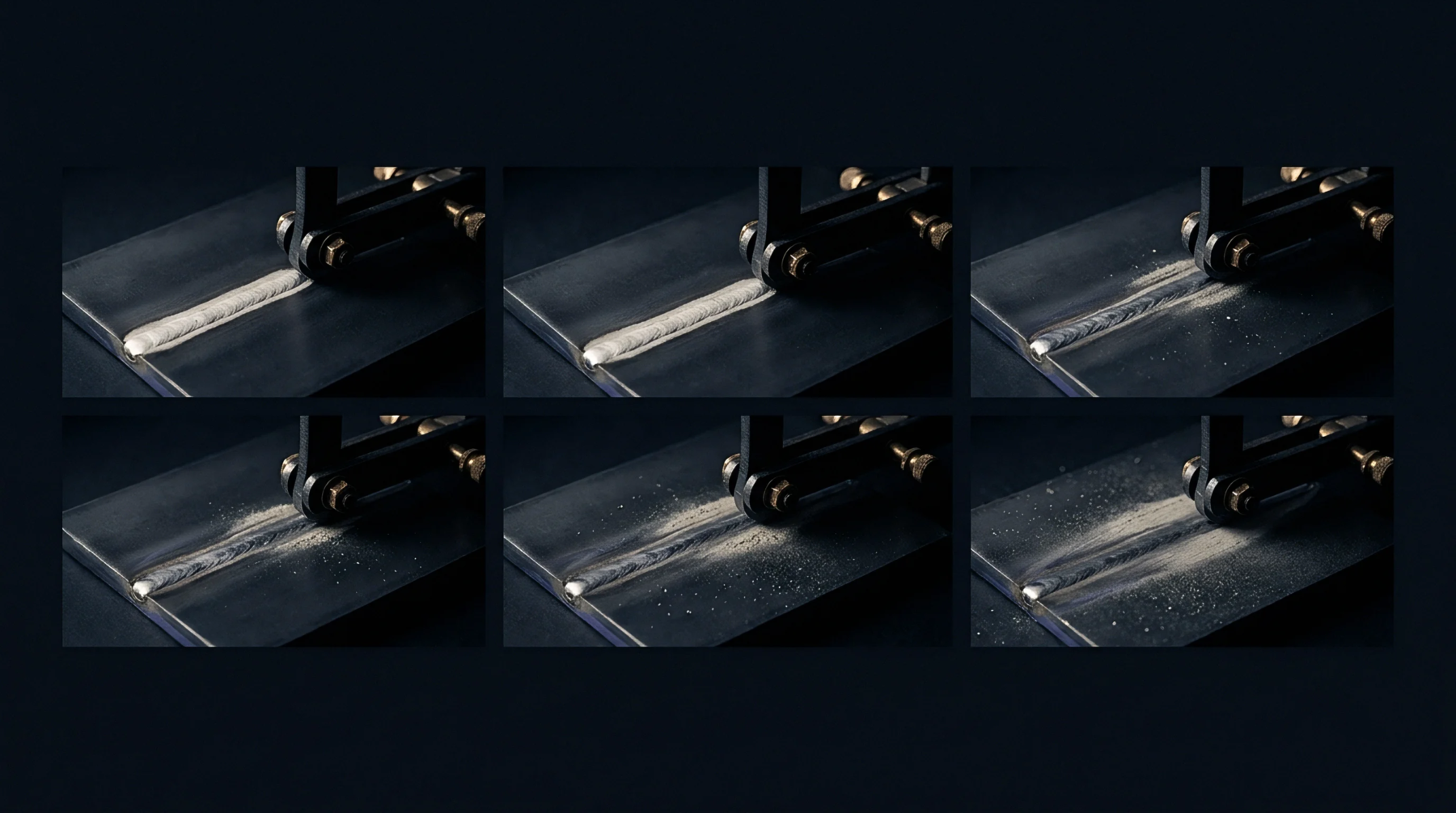
Multiphase Superalloy Solution Heat Treatment Basics
Solution heat treatment dissolves strengthening phases near solvus limits; accurate pyrometry and fast quenching prevent grain growth and incipient melting.
Thermodynamic resistance to chemical decomposition and phase dissociation governs the integrity of titanium-carbon interstitial compounds within alloy matrices subjected to prolonged thermal exposure. In stabilized stainless steels, nickel-base superalloys and composite cermet systems, titanium carbide stability prevents interstitial carbon from migrating to form inferior grain boundary phases. The compound exhibits exceptional enthalpy of formation, maintaining mechanical hardness, chemical stability and crystal lattice continuity up to high temperatures.
This stability preserves wear resistance and prevents intergranular sensitization in austenitic stainless steels like AISI 321. The chemical bond stops functioning as an effective carbon trap when temperatures exceed dissolution thresholds, causing titanium and carbon to dissociate back into the host metal solution.
The exceptional stability of titanium carbide stems from strong mixed covalent, ionic and metallic bonds within its face-centered cubic rock-salt lattice. Titanium possesses a far greater chemical affinity for carbon than iron or chromium, driving preferential nucleation of TiC over competing M23C6 carbides at high temperatures. The standard Gibbs free energy of formation for titanium carbide remains negative across normal heat-treating ranges, ensuring stability against spontaneous breakdown.
Because titanium carbide possesses a high melting point exceeding three thousand degrees Celsius, it resists coarsening and coalescence during prolonged intermediate soaking. In solid solutions, the stoichiometric balance between titanium and carbon determines dissolution temperatures, with excess titanium lowering carbon solubility across operating matrices.
Preservation of stable titanium carbides protects corrosion resistance by locking carbon into inert, finely dispersed intragranular particles. In austenitic steels, stabilizing carbon prevents it from reacting with chromium during welding, brazing, or high-temperature service exposure. This localized carbon capture eliminates the chromium-depleted boundary zones that drive intergranular stress corrosion cracking in aggressive acidic environments.
Within cutting tool substrates and wear-resistant coatings, titanium carbide particles maintain elevated hardness and resist frictional abrasive wear under intense mechanical loading. The presence of these dispersed compounds pins grain boundaries, preventing abnormal grain growth during high-temperature forging or annealing cycles. Fine particle distributions produce steady dispersion strengthening throughout parent metal grains without generating embrittling boundary films.
Verification of carbide stability and phase presence uses quantitative diffraction and electron microscopy specified by GB/T 13298 and related metallurgical standards. Scanning electron microscopy paired with energy-dispersive X-ray spectroscopy confirms that titanium carbides remain intact as isolated intragranular particulates rather than converting to complex chromium-iron carbides. Metallurgical evaluations involve chemical stabilization annealing cycles near nine hundred degrees Celsius, followed by prolonged sensitization holding to verify that chromium carbides do not precipitate.
Chinese industrial inspection agencies require intergranular corrosion testing under GB/T 4334 to verify that titanium stabilization remained fully functional following fabrication welding steps. X-ray diffraction analysis identifies crystallographic parameters, confirming that stoichiometric TiC phases have not dissolved into non-stoichiometric sub-carbides. Rejection of material batches occurs if analytical tests show widespread titanium carbide dissolution, significant nitrogen substitution forming carbonitrides, or formation of chromium-depleted networks.
Technical inspection records and material mill test certificates must document stabilization heat treatment profiles and titanium-to-carbon chemical ratios to confirm long-term phase integrity for critical pressure vessel service.
Solution heat treatment dissolves strengthening phases near solvus limits; accurate pyrometry and fast quenching prevent grain growth and incipient melting.
Expertise is a utility, not a secret. sentiention™ publishes its working knowledge as open reference: intelligence layer covering the materials it sources, the markets it enters, and the reference that serves both.